First rain

March 30, 2013

Distance: 42.1 miles        Climbing: 2401.6 ft

We must have started biking during rush hour, because the road was busy. After yesterday’s excitement, neither of us was interested of having a repeat or dealing with the traffic.

As usual, we encounter a 400m pass, which we were expecting. The pavement was smooth and trees lined both sides of the road. If only every pass had such a nice road. The sky was filling up with clouds, so we were having a nice time climbing when we heard a boom in the distance. Suddenly, it was raining on us heavily. We stopped and rushed to pull out our raincoats which were buried deep in our panniers.  It was a good thing we stopped because a semi carrying a segment of a wind tower came charging up the hill. This thing was an extra large load and probably would have swept us off the winding road.
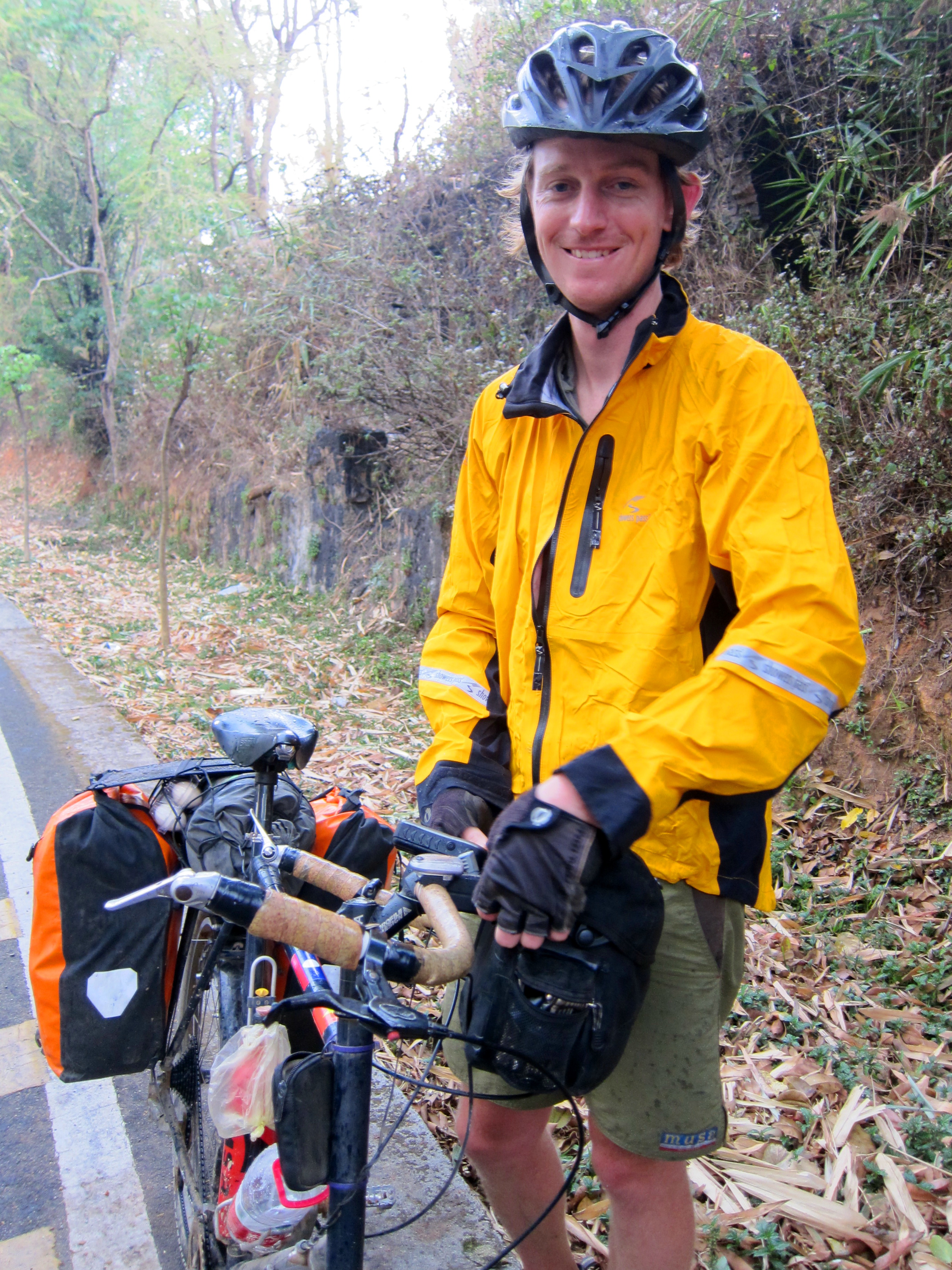
Raincoat finally making its debut

Raincoat finally making its debut

Wind turbine section

Wind turbine section

The rain ended as quickly as it began, so onwards and upwards we went, shedding our raincoats as the sun came back out and cooked us. The scenery was incredible on the way down the other side. All the hillsides were terraced with tea bushes or rice fields. The change in air temperature was obvious as we descended, becoming thicker and warmer. After a few switchbacks, we were at the bottom of a valley with only a few miles to the day’s destination, Mengman.
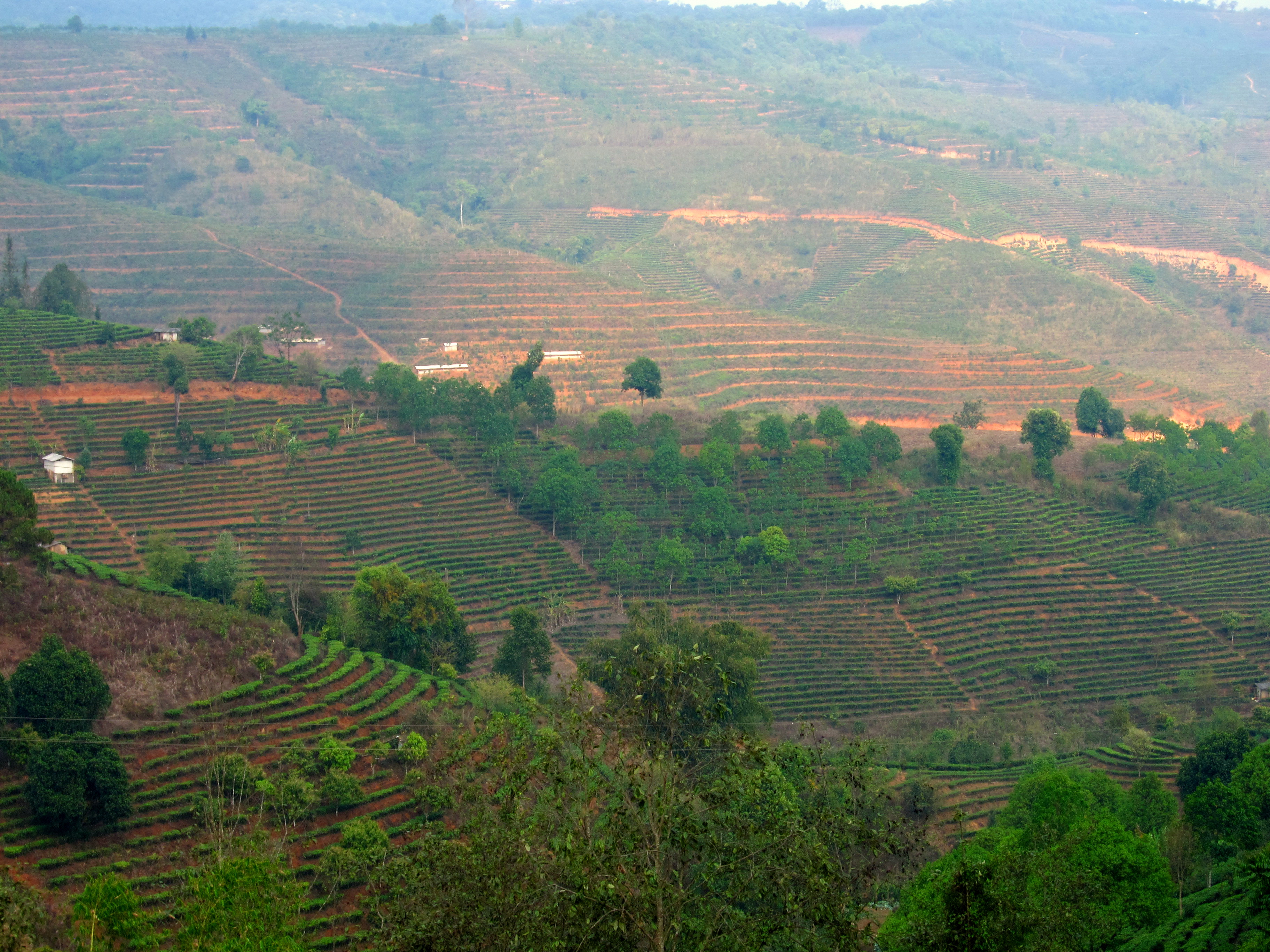
Terraces

Terraces

When we hit Mengman, it was dirty and smelled like gasoline. The main drag was a dusty cobble stoned track that we we’re much interesting in rambling around on. Before we knew it we were at the base of the hill, out of town – back in the midst of banana plantations almost immediately. Once we realized that we had cleared the town, neither of us felt like turning around. We figured we could find a place to camp or find another town with a hotel. After a quick snack, we continued on.

We biked along a shady road which eventually became steeper and steeper. My legs were tired so I soon fell behind Chandler while cursing the terrain. We passed a number of brand new buildings and hotels, but nothing was open. As we crested a pretty large hill we came to a newish looking development of four story buildings built with pseudo-rustic wooden gables and slate roofs. Most of the shops were closed, vacant or were converted into housing, but after a little bit of looking we found a hotel that was open.
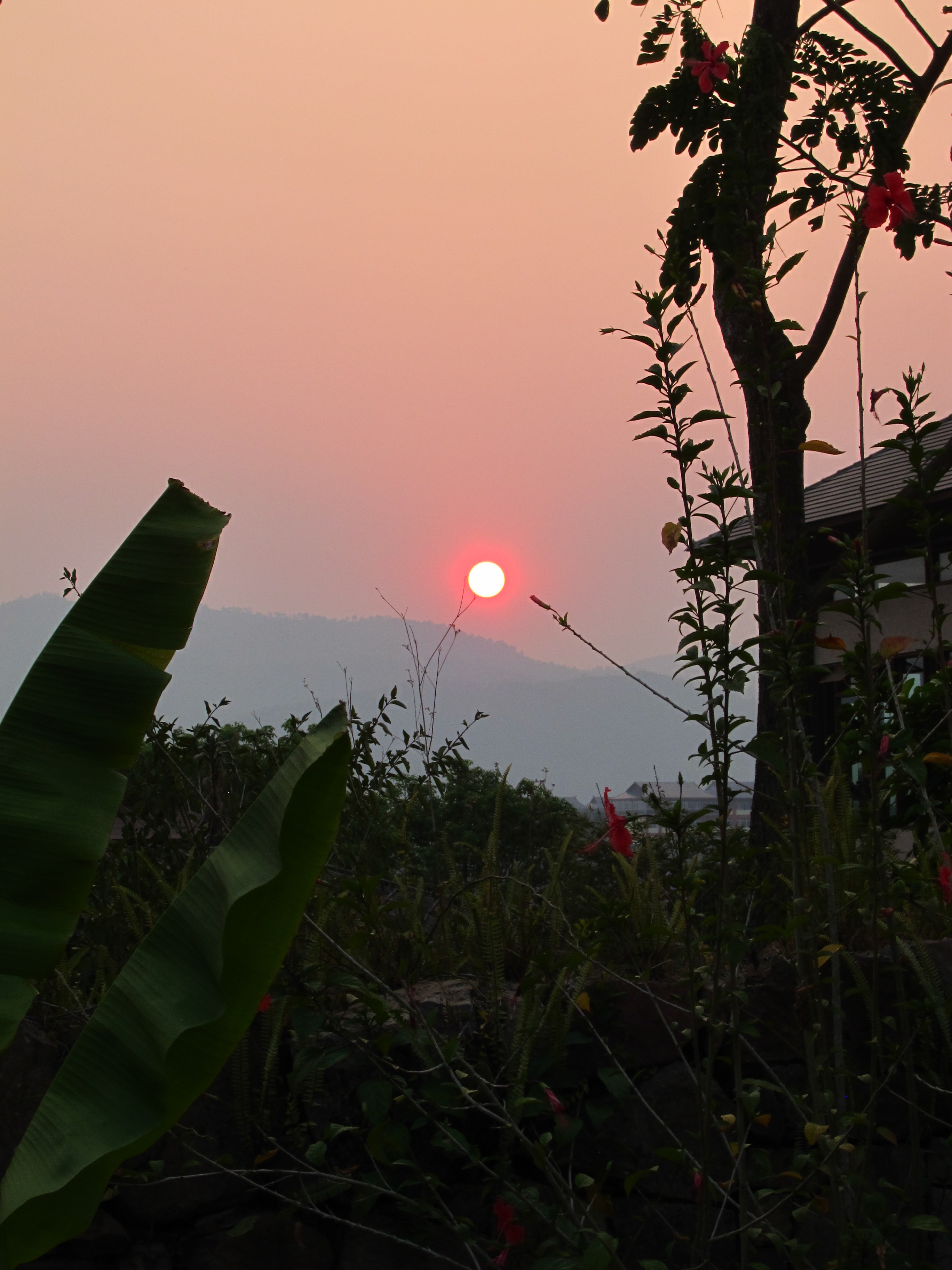
Chinese sunset

Chinese sunset

As usual, Chandler went in and all the arrangements for us and the bikes. After looking at the room, he said it was 80¥ and we might be able to squeeze the bikes in with us. I expected the place to be a dive, but the room ended up being large enough for us to have a game of catch. The room could only be described as palatial.

We settled in, taking up less than half of the room and tried the TV. On occasion, we have been able to find a movie of the news in English. Tonight, all we found were Kung Fu films and melodramas. Chandler decided to go out and find some food while I just read. He came back a few minutes later with stir fried noodles. He quickly devoured his meal and wanted another. After convincing me to join him, we went down to the street. I was in luck. These noodles could be made vegetarian, so for the first time in China, I enjoyed the street food with Chandler.

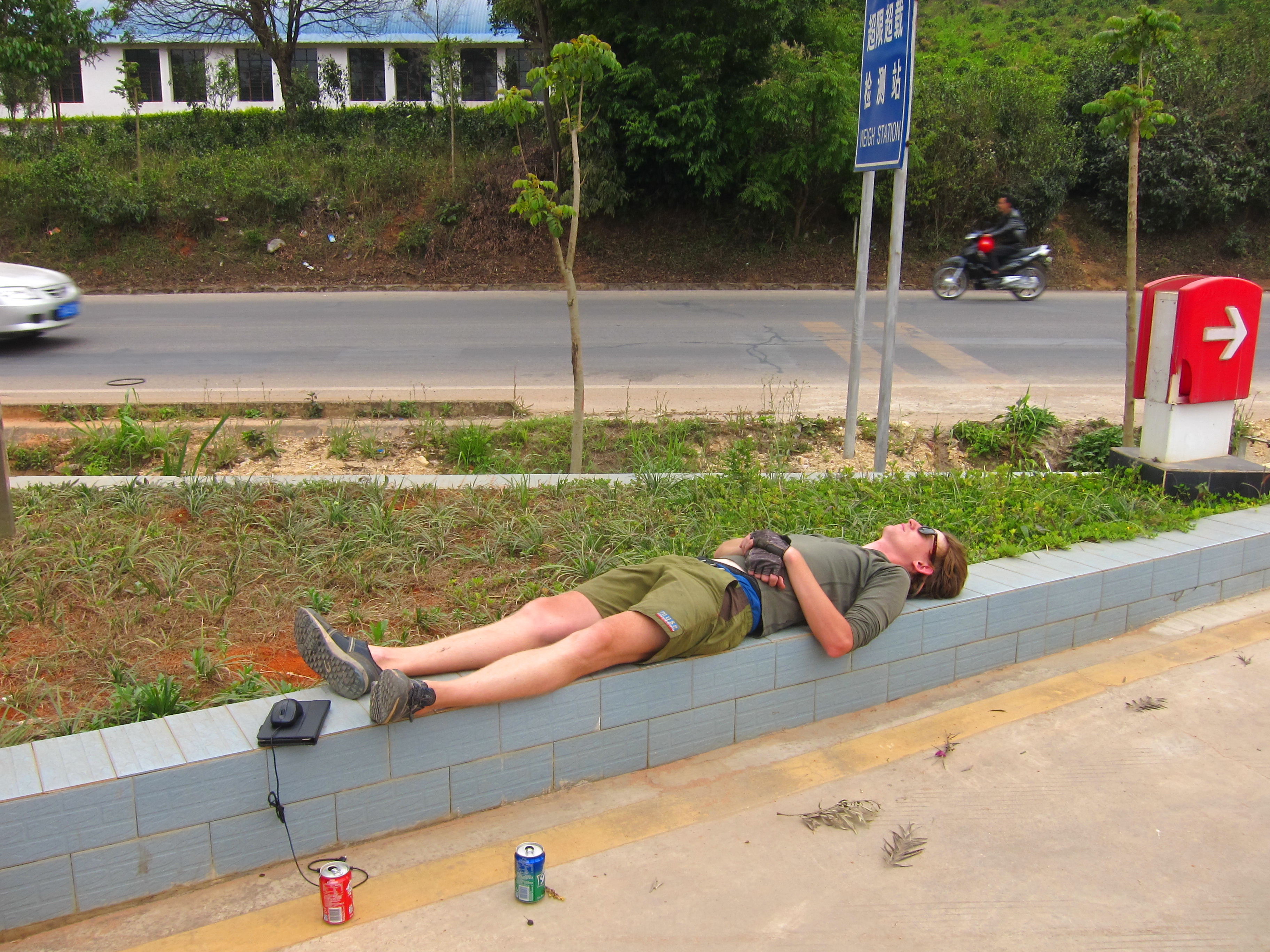
Crashing

March 29, 2013

Distance: 31.2 miles       Climbing: 2979 ft

We woke up early to get on the road before it got too hot. We cooked up a breakfast of oatmeal with the hot water heater in the hotel. Getting out of a big city is never my favorite thing since it takes awhile to actually get through all the urban sprawl at the edges before it thins into the countryside. The industrial areas that surround these big Chinese cities always clouded with noxious fumes from partially combusted gasoline and welded metal. On top of this the air is usually full of dust and plumes of diesel exhaust from loads of big trucks.

The western suburbs of Jinghong were no exception and on top of that, our GPS map was not as detailed as it could have been so we took the wrong road and ended up stuck on the busy new highway and not the quiet older road.  When we finally hit the countryside, the traffic did not let up. We had a small shoulder covered in deep drifts of sand and gravel that had blown off the convoys of uncovered haul trucks carrying fill to yet another construction site. Huge concrete light poles were staged periodically, laid askew along the shoulder which forced us to swerve out into traffic as we passed each one. As we hit a really sandy patch, my front pannier hit one of the poles and before I knew it I was laid out on the road with my bicycle on top of me. As a motorbike swerved around me, my first thought was to get the hell out of the road before a truck runs me over.

Chandler was immediately at my side, giving me a hug, picking up my bike and collecting my panniers that had flown off in the crash. Luckily, no trucks came during my crash or after as we cleaned the road of my belongs and I wasn’t badly hurt. It was obvious I was going to have some major bruises and a few scrapes, but nothing to worry about. My bike took a bit of a beating too with a few scratched, the bar tape ripped off and my front break had exploded as my front handlebars spun 180 degrees, but Chandler fixed everything in a matter of minutes.

We started back up, a little slower and a little shaken, and soon found ourselves climbing a hill. After a few miles we passed the pit where the sand and gravel was coming from so there were fewer big trucks on the road and the shoulder was passable again. We hadn’t done any research about the road we were on, so we had no idea how big of a hill we were climbing. In a way, not knowing made it easier because we couldn’t agonize over how much further there was to go. At 1200m ASL we began to see tea terraces, which distracted us from our climb.

Tea plantation

Tea plantation

When we finally crested the pass, we hit a major headwind which slowed us down to half our normal downhill speed. It is so frustrating to climb a big hill and not be able to full relax and rest on the downhill because you must peddle to keep moving. As we started back uphill, our moods sank and were soon very grumpy. A few miles from town, we stopped at a gas station for a soda break.

Chan taking a break

Chan taking a break

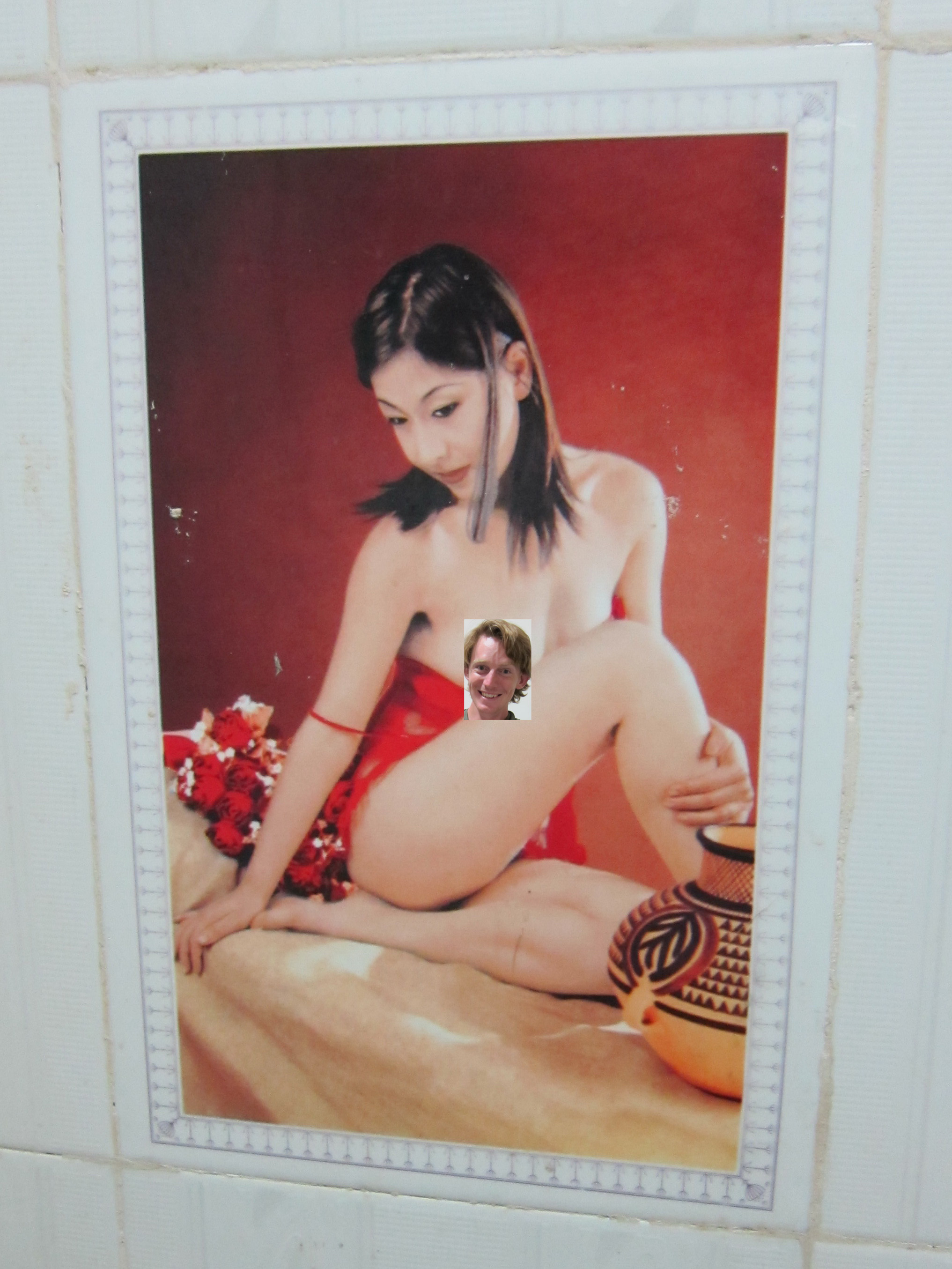
Menghai was another Chinese city in the midst of a transformation. A large highway bisected the development with the old town on the left and a set of massive apartment complexes encroaching on the rice and vegetable fields on the right. We rode into the bus station area, found a few hotels and inquired to the prices, settling on the cheapest one as they all looked about the same. The floor and walls were dirty and the room smelled of stale cigarette smoke, but the beds were perfectly clean. The bathroom also came with some interesting “art” on the tiles.

Bathroom tile

Bathroom tile

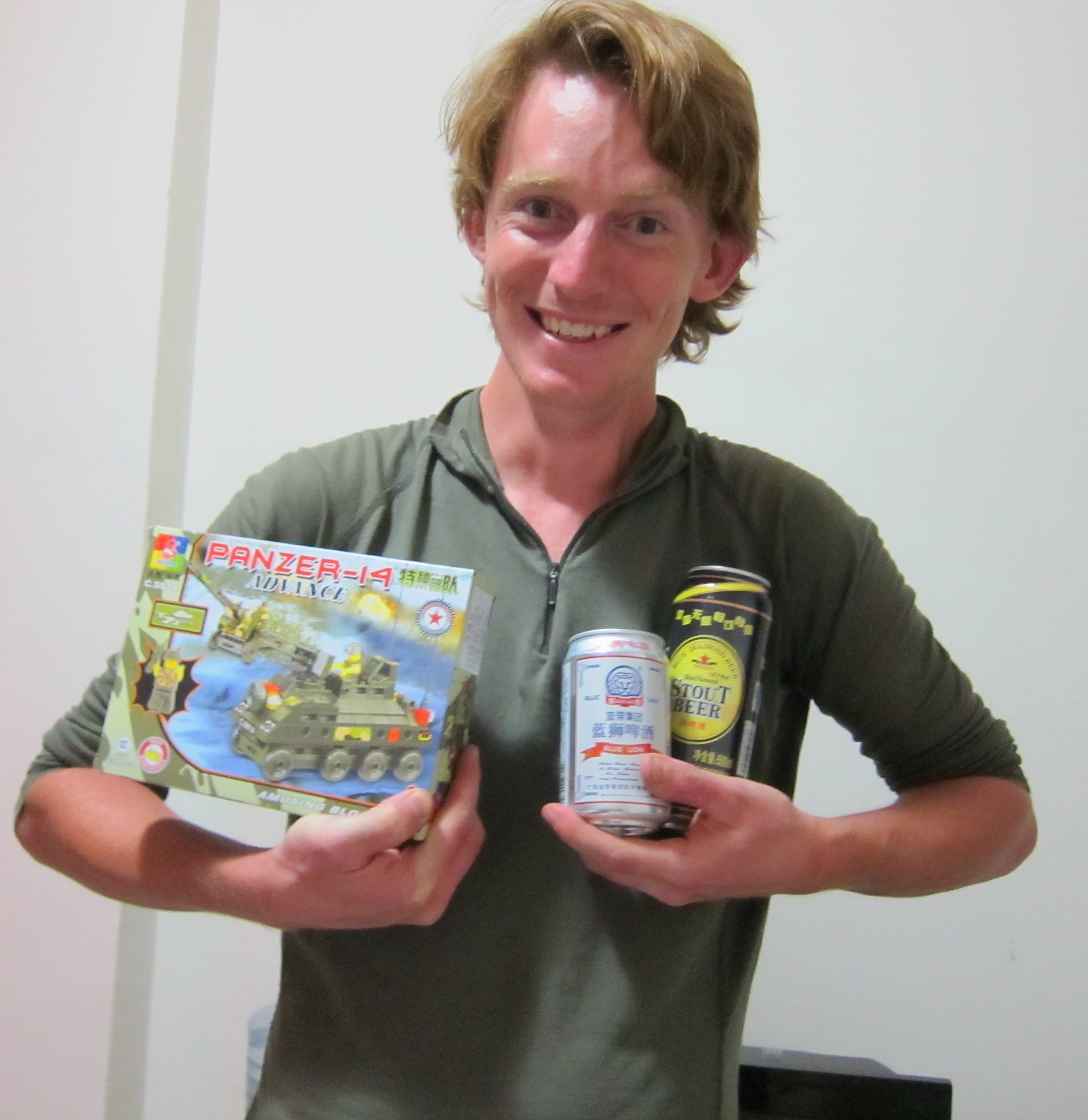
There weren’t any restaurants near us, so we headed to the market. There we bought garlic, potatoes, onions, green onions, ginger and tofu for about $4 USD. We couldn’t believe how cheap the veggies were and headed back to make ourselves a feast on our campstove. After dinner, I watched a movie while Chandler went out to find us a couple beers. He came back with not just the drinks, but a Chinese knockoff Lego set (“It was only $4!!!”). He is no longer allowed to go out shopping alone.

Dinner prep

Dinner prep

Chandler's purchase

Chandler’s purchase

Tea time in Jinghong

March 26 – 28, 2013

We always have a bunch of chores to do when we get to any major city like laundry, grocery shopping, fixing things, etc. We also like to take a few rest days in a place where we have good food options and interesting things to do, so we decided to take a few extra days in Jinghong.

IMG_3511

Chan’s soup


Besides dealing with errands, we spent most of our free time drinking tea. The Yunnan province is famous for its Pu’er tea. This style of tea is unique because it is typically consumed after it has been aged anywhere from a year to decades. The teas are typically pressed into cakes and loosely wrapped in paper which permits exposure to humidity and natural microorganisms which “ferment” the tea over time. Certain teas age well and a 500g cake can end up being worth thousands of dollars if properly conditioned. Some people purchase the cakes as a form of an investment, especially recently as the tea has become more popular, the market price of Pu’er has rocketed. Teas from the wild trees are the most coveted, but from what we understood it is very difficult to accurately trace the specific origin of any given tea and the market is fraught with false claims.

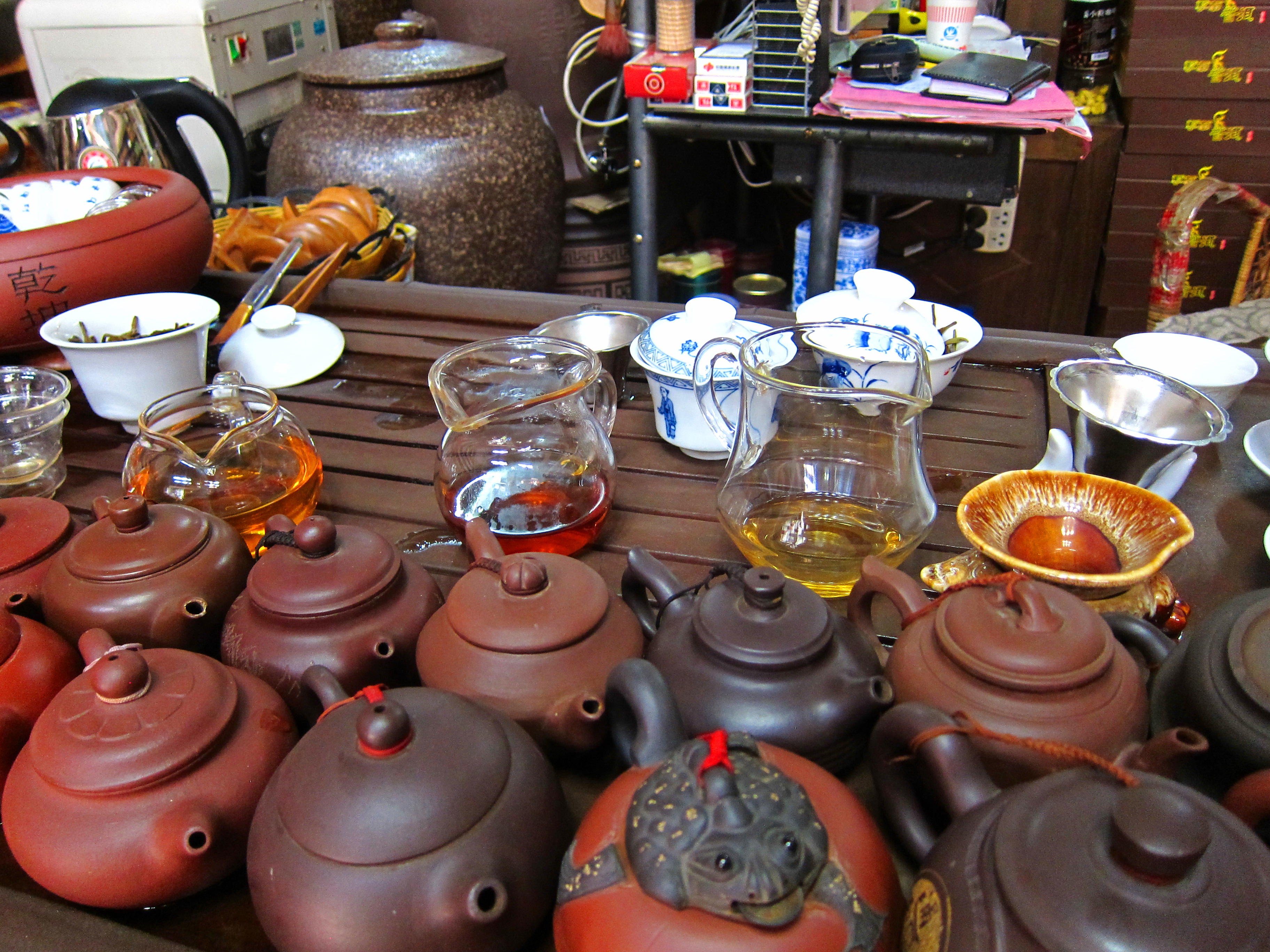
Our first day in town, we wandered a few feet from our hotel to find a large tea shop with the proprietor waving us in. We poked around looking at the various teas, teapots and all the other tea related accoutrements before the owner motioned for us to sit down for a drink. First she placed loose tea leaves in a gaiwan, a flared porcelain cup with a lid, washed the leaves quickly with boiling water and used that water to warm the drinking glasses. This process was done twice before she poured the warm tea into a decanter from which she than served to us in tiny teacups. The tea leaves are quite potent and needed to be seeped for only a few seconds at a time. The leaves were re-infused at least a dozen times before they were discarded. The flavor and color of the tea changes with each infusion, usually starting pretty rough and bitter, then becoming sweeter, then more delicate, though each tea is different.

Our hostess made us three different teas, all from the same region but from different years. The tea from this year was very bitter with a light straw color while the teas from older years produced a rich red colored tea with a more sweet finish. We communicated with her through hand gestures and a calculator which she used to indicate the age of the teas, and the trees in the photos on the wall. She was very patient with us, which we greatly appreciated. After several hours of drinking tea, we learned a lot about tea without the benefit of verbal communication.

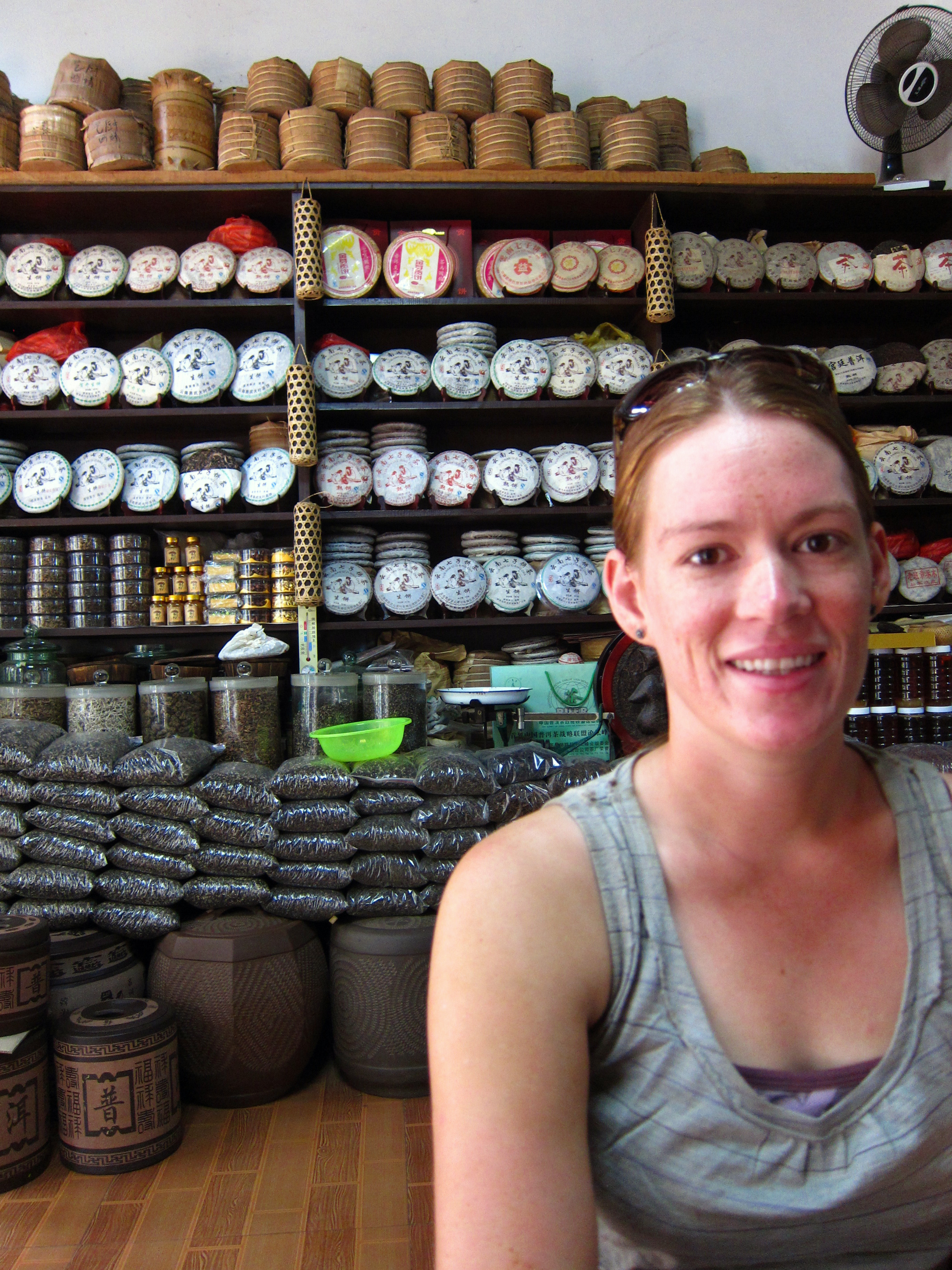
Our tea hostess

Our tea hostess

IMG_3514

Tea from the same region but three different years

IMG_3520

So many varieties of tea

We visited a few other tea shops, but the first was our favorite and visited it a few times to drink tea and watch kung fu movies. Each tea shop serves tea from different tea trees and regions, so it was interesting to taste the different variety and years that people offered. It was also interesting how people reacted to us. Some people were just not interested in making the effort to get past the language barrier, while others would practice their English or use translation apps on their phones. One woman wanted to make sure we were comfortable and decided music would help, so we sent an hour drinking tea to Justin Beiber.

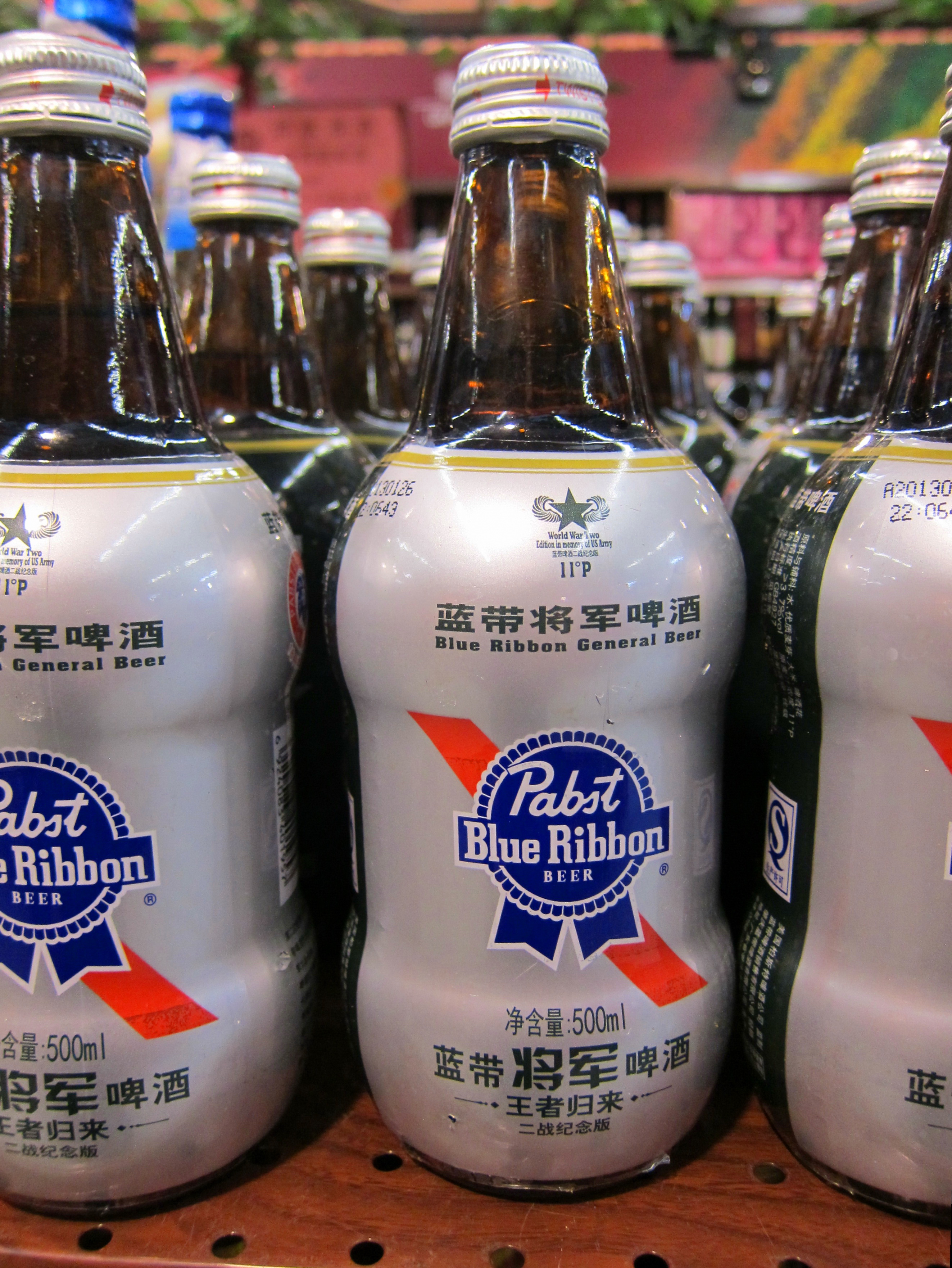
We spent the rest of our time wandering around the town and watching Downton Abbey. We found a huge grocery store which carried a number of western items like peanut butter and PBR along with the usual unidentifiable Chinese food items. The internet was very finicky, so we spent a bit of time trying to figure out what was and wasn’t banned. All social media websites and personal blog sites, like WordPress, were off limits and Google would shut down if we searched for certain topics. Skype barely worked, but we were able to convince Chandler’s brother, Tayler to upload the photos and post we had written. Thanks Tayler!

IMG_3524

Chinese PBR for our troops


The bee’s knees

March 25, 2013

Distance: 45.6 miles        Climbing: 2414.7 ft

There is something about southwest China that is very relaxing. Maybe because the temperature is cooler we didn’t feel the need to rush out the door and instead lingered over breakfast and coffee. Maybe because the old highway is like a big shaded bike path built just for us and the local farmers.

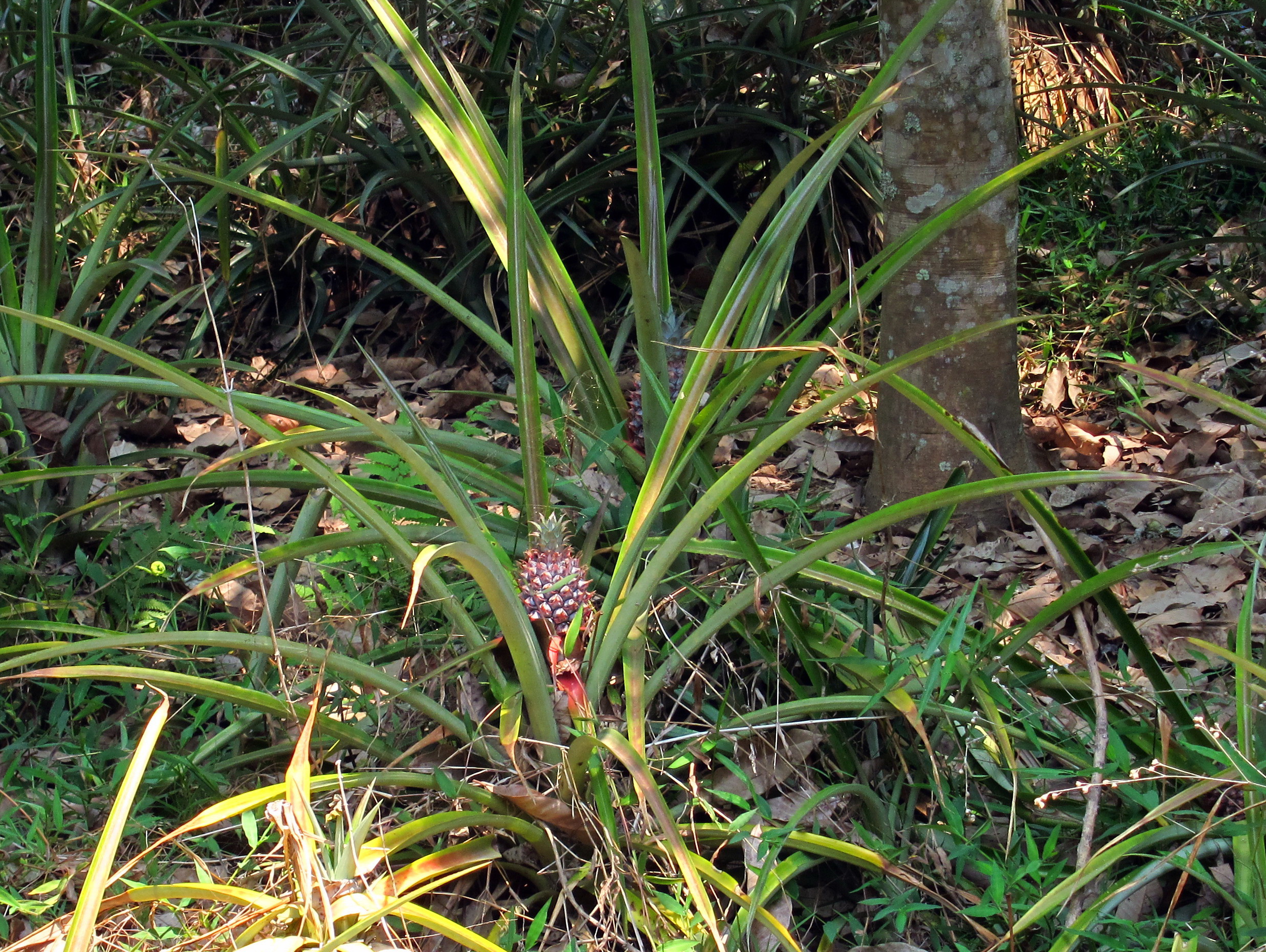
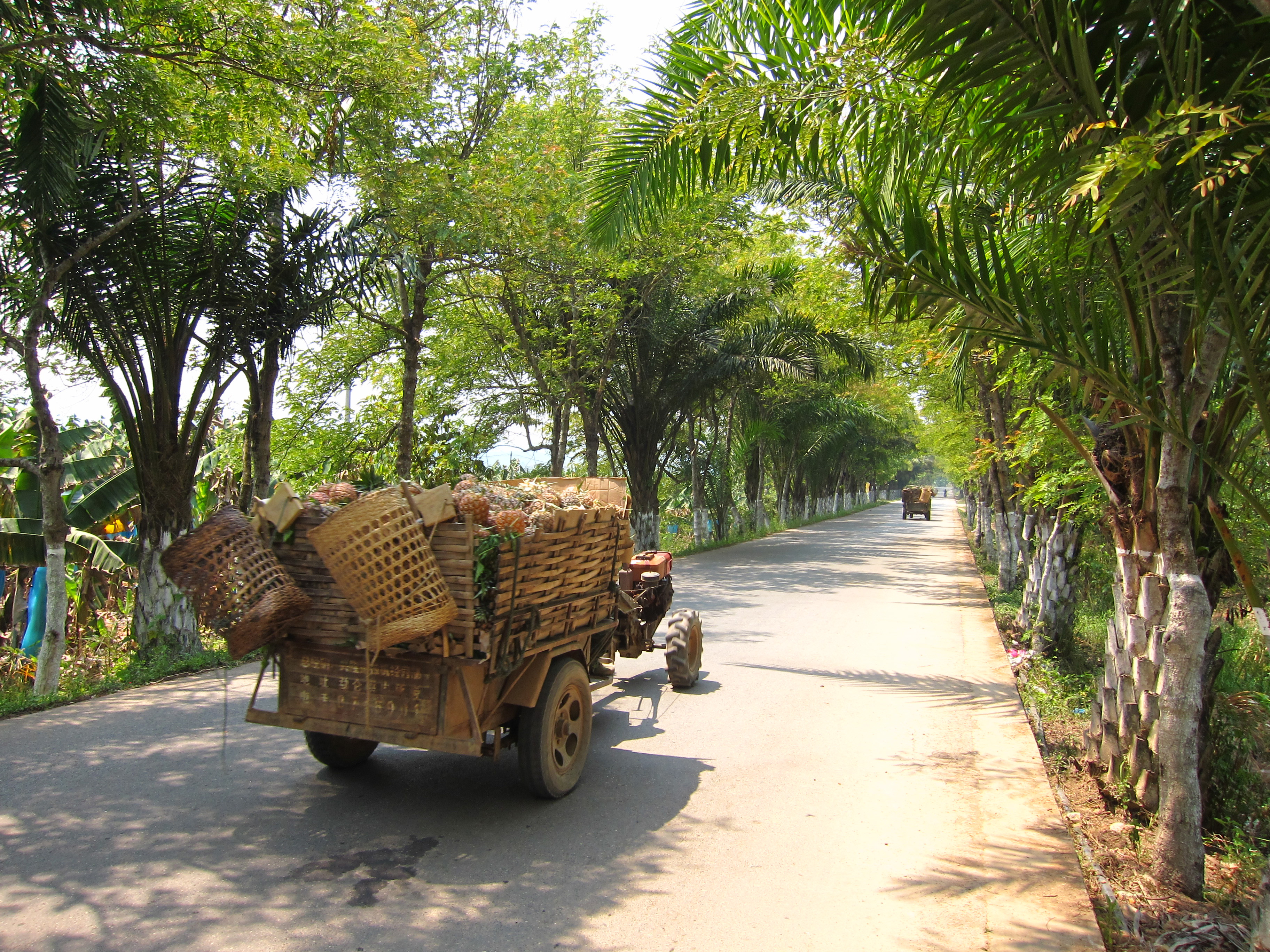
When we did get started, we pedaled past farms and banana plantations as we went waited and waited for the daily hill to climb. We were pleasantly surprised to only encounter a few gentle hills and flat pavement. Today was special though as we saw some new things: pineapple and bee hives. The pineapples were being grown down in the shade among the rubber trees, the latter we’ve seen a lot of. It took us a while to figure out what was growing as we peddled by.

IMG_3460

Little pineapple plant

IMG_3456

The pineapple express

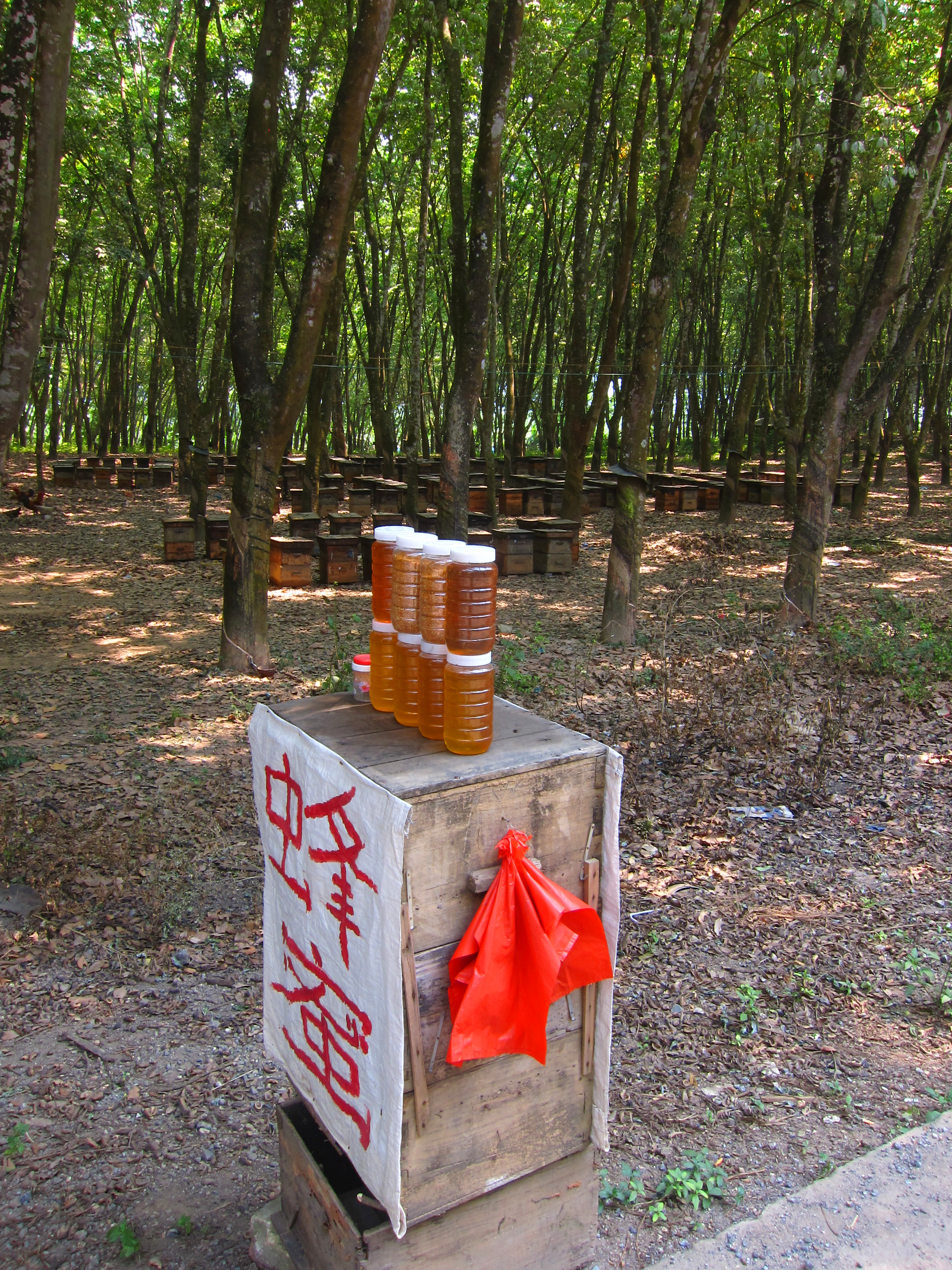
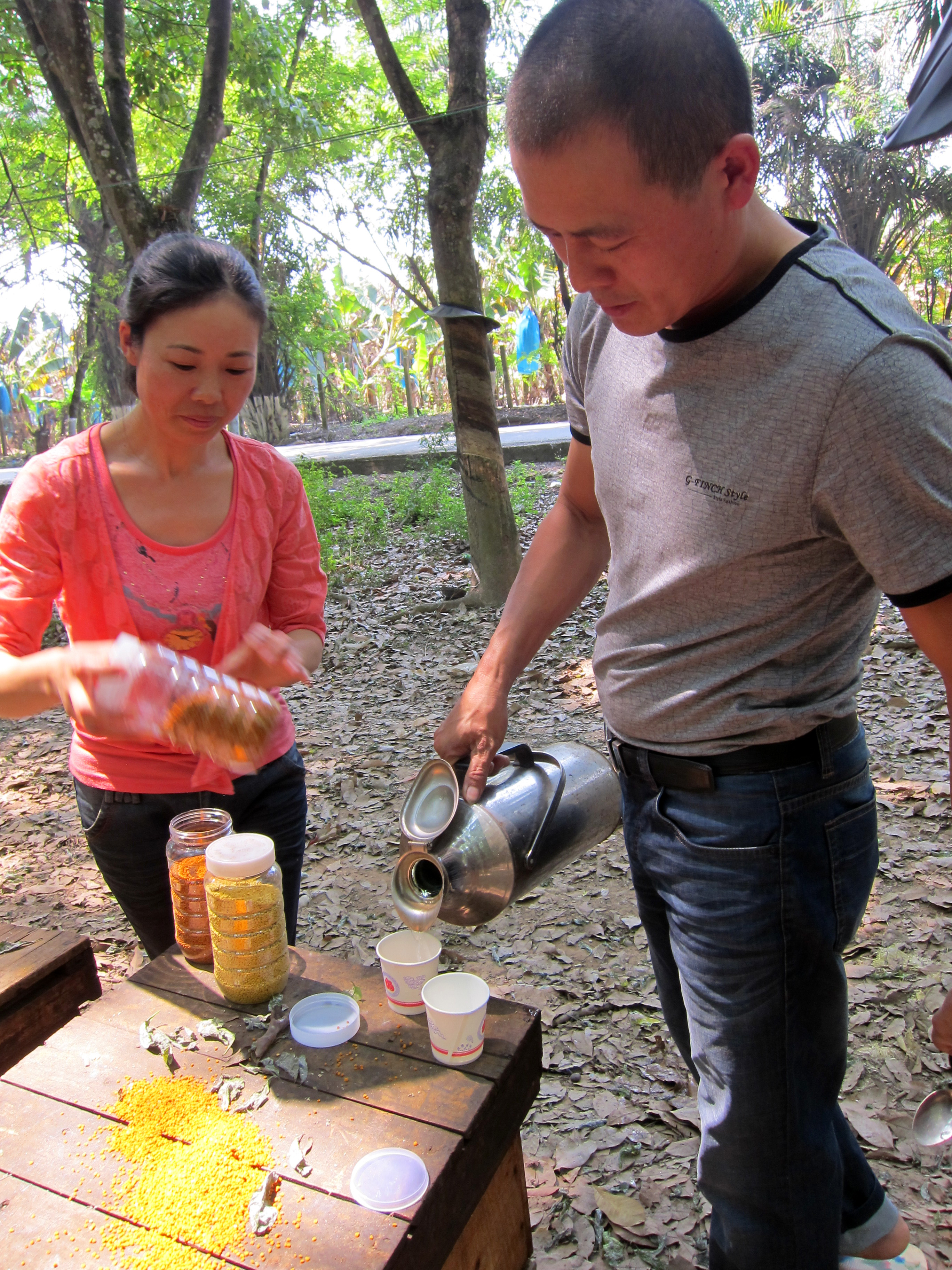
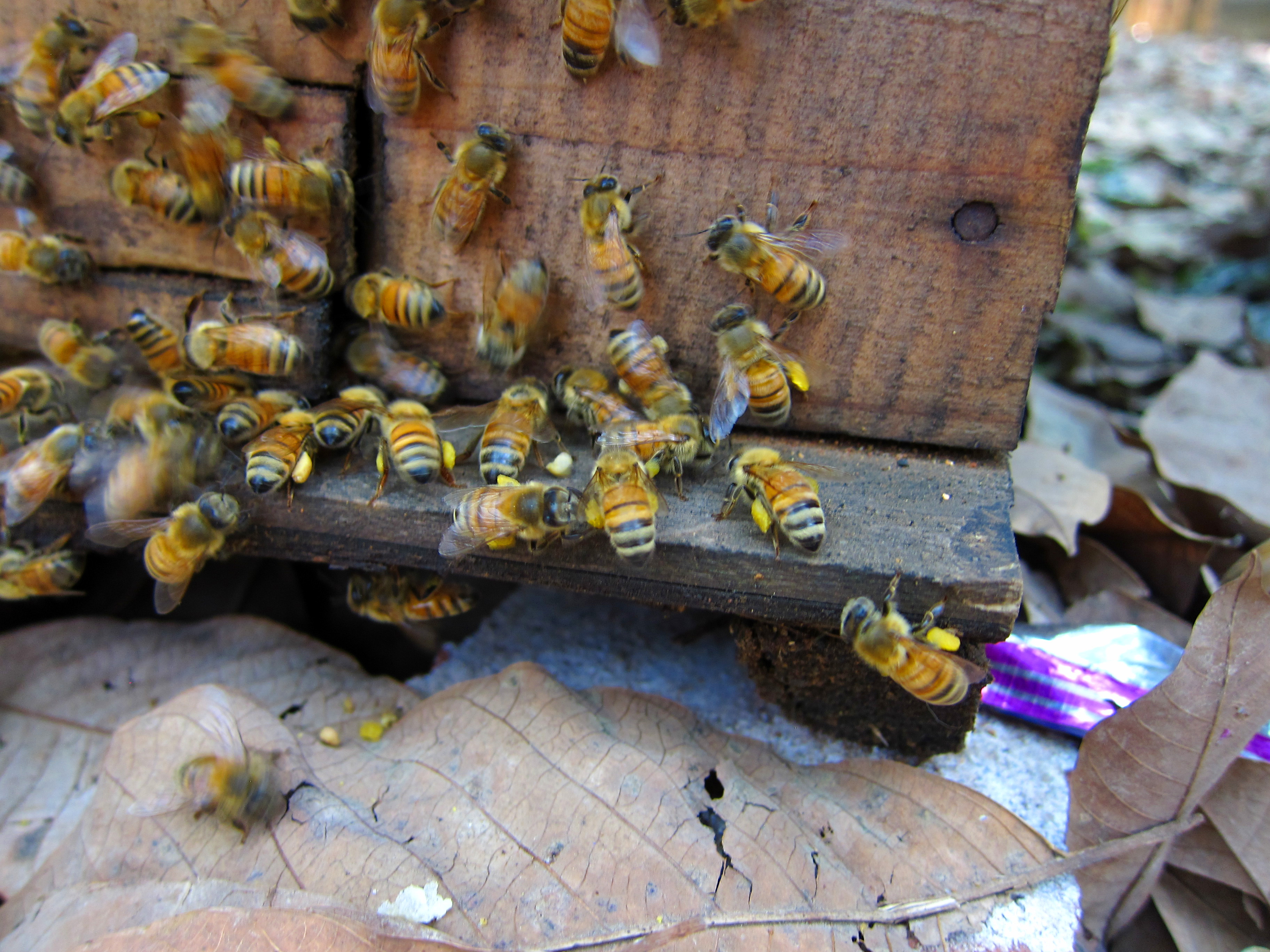
At the first set of hives, there was a table by the road with honey displayed on top. We hit the brakes and waited for traffic to pass so we could cross the street. A young couple immediately walked us to and opened the jars so we could taste the different varieties they sold. As we pointed between hives and honey, they began taking us through their entire operation. They picked up bees to show us the pollen attached to their legs and pulled out the shelves inside the hive to show us the honey comb.  They only spoke in Chinese, but through a number of cell phone pictures and hand gestures we learned about keeping bees and honey. The different types of honey they made seemed to be based on the pollen the bees were given, which came as tiny pellets in brown, red and yellow colors. Before we left they mixed up a drink of bee pollen, hot water and honey drink for us to try, which I quickly found out I am allergic to. Apparently the drink is good at eliminating crow’s feet! We bought a liter of the darkest honey for 50 Yuan, which seemed like a deal.

IMG_3473

Honey for sale

IMG_3489

Mixing up a special honey pollen potion

IMG_3490

Busy bees

We left after a long round of goodbyes and we excitedly discussed what we could use the honey in. After a few more miles of flat riding we suddenly came to the Mekong! The road intersected a major route that followed the east river bank and traffic increased a lot from what we had been riding in all day. With the traffic came big trucks whizzing by hauling massive loads of stone and soil. Suddenly, we were in a full on construction zone which was total chaos with the road ripped up into horrendous hardpacked ruts, dust everywhere and us bouncing all over the place, trying not to get in anyone’s way. At that point, we went through a small village, where the drains were all torn up so sewage was running all over the road and we had nowhere to go but through it. We both told ourselves it was just muddy water.

IMG_3494

The mighty Mekong

Finally we caught our first glimpse of the southern end of Jinghong. Our first glance had us thinking we had entered the video game Sim City. There must have been about thirty of the exact same concrete high-rises built on the outskirts of town. The buildings all appeared to be empty with more being built. It was a vacant city that I imagined would someday open its doors to a flood of tenants who would fill up that massive void of empty living space, creating a city of hundreds of thousands overnight. It was surreal.

IMG_3505

Looking for a new apartment?

Eventually, we made it to the more normal part of town and headed for the tourist area. We got a little mixed up trying to find our hotel, but finally noticed a sign leading the way. When we were clean and everything was stored away, we went out for a delicious pizza dinner and walked around town.

Lunch at the temple

March 24, 2013

Distance: 29.2 miles Climbing: 2349.1 ft

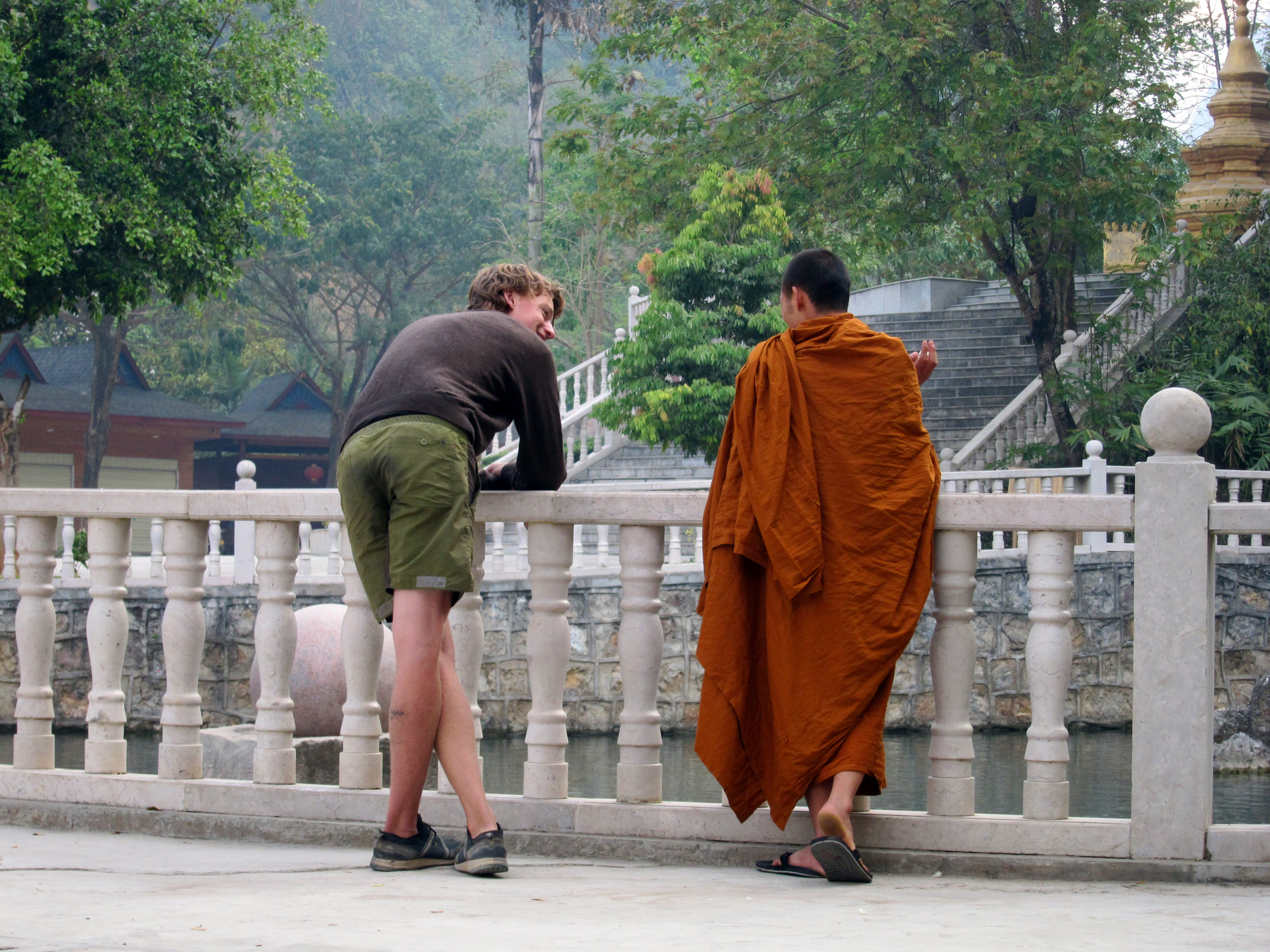
We woke up with the sun and to the sounds of footsteps outside our tent. People were curious about us, the bikes and the tent. The officer from the night before came over to say good morning and asked us how we slept with his hands. I packed up everything inside the tent as Chandler prepped the stove and began breakfast. Once we started cooking some potatoes a group of women, their children and a few monks walked past us to the pond. One of the monks spoke English and asked us about our journey. He also explained to us that the women were interested in our stove because they had never seen anything like it.

IMG_3390

Chandler and the monk

Eventually, their curiosity wore out and we were left alone to enjoy our meal. With a decent ride ahead of us, we prepared a large breakfast including potatoes, oatmeal and coffee. After cleaning up the pans and the rest of our campsite, we joined the group at the pond to watch people feeding the fish. The English speaking monk returned for a chat and invited us up to the temple for lunch, which we gladly accepted. Lunch wouldn’t be for few hours so we took our time packing and just hung out relaxing.

Around eleven we biked over to the temple, which was conveniently next door to the park. We were shown the temple and then guided to the back where the monk’s rooms are located. A low table was set up with fruit and snacks for us and we were offered tea and beer. We were surprised to learn that the monks were from Lao and allowed to eat meat while in China (but specifically not tiger, elephant, snake or dog). The Chinese monks do things very differently than the rest of Southeast Asia.

P1010148

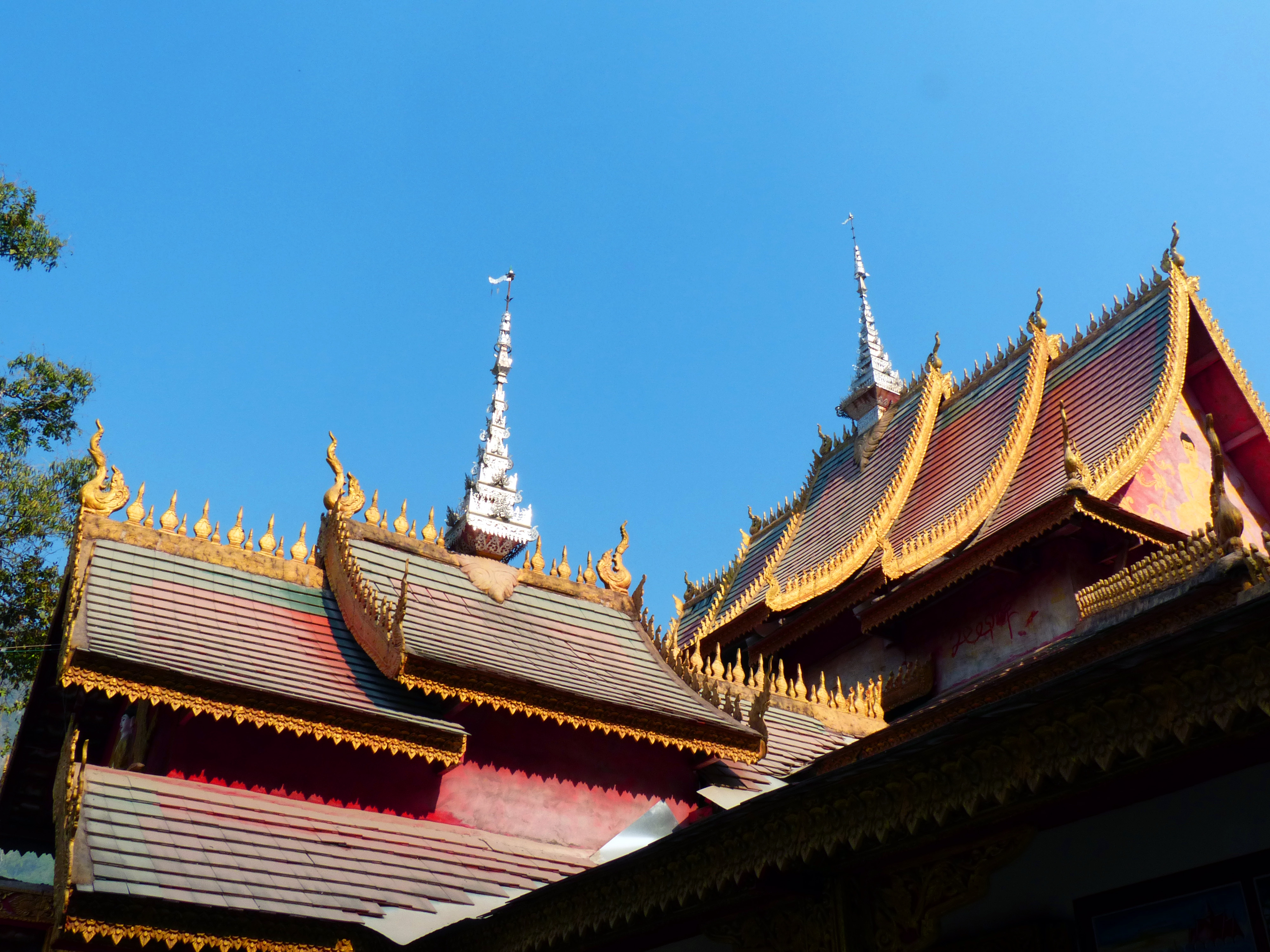
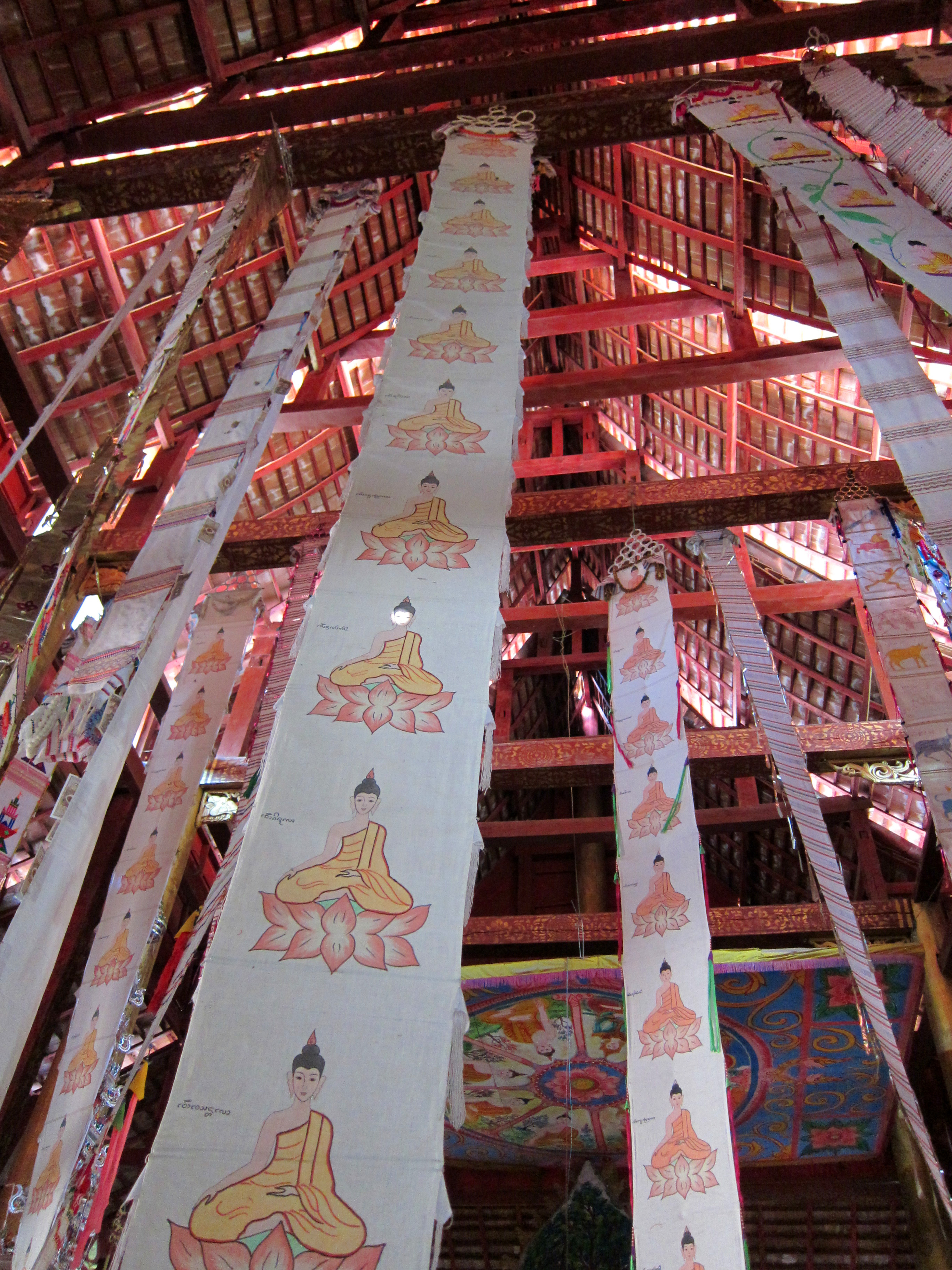
Temple roof

IMG_3404

Banners inside the temple

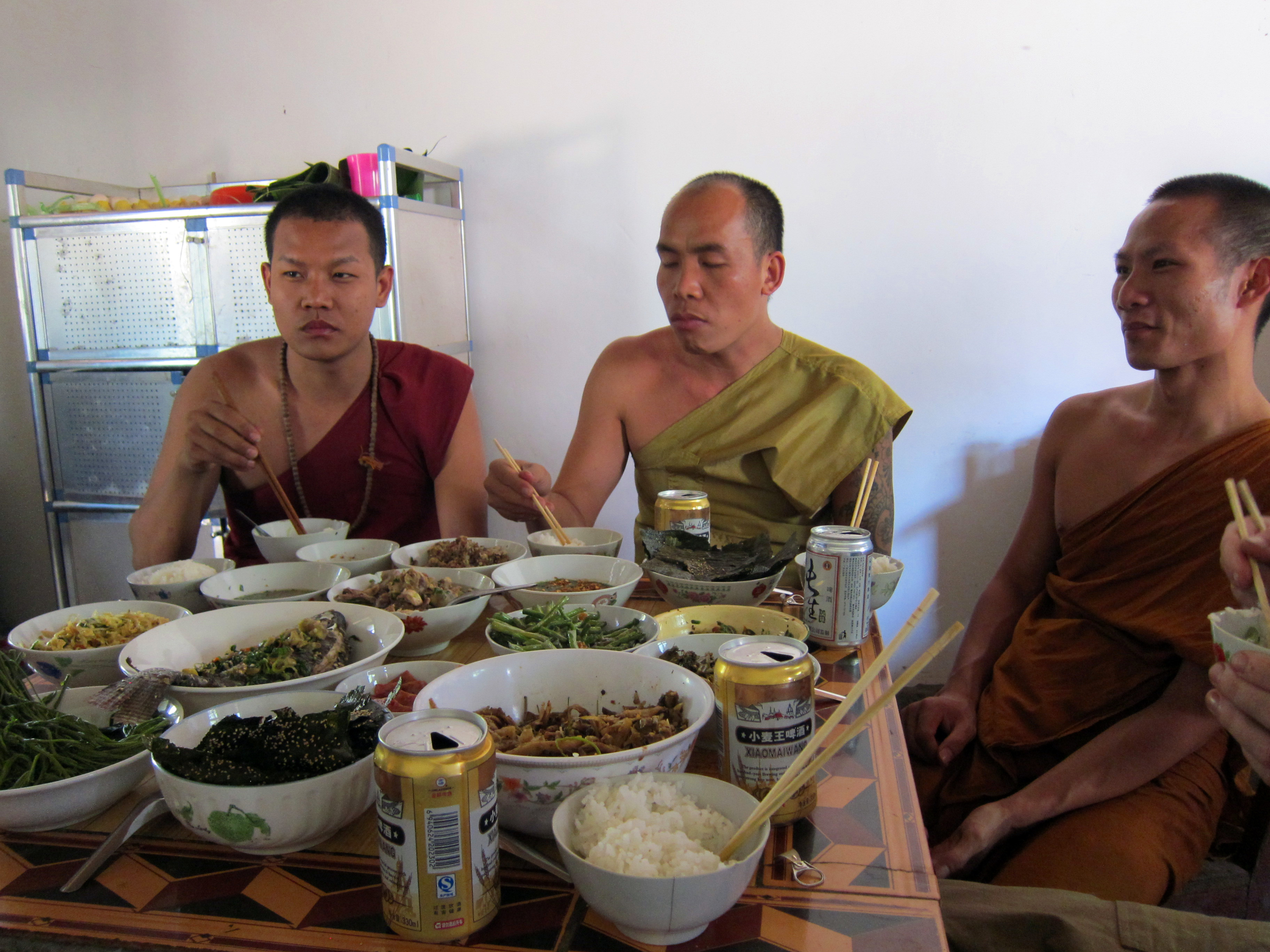
As we sipped our tea and beers, we were entertained by a younger monk while everyone else hustled around cleaning all the rooms. We talked about where he was from and answered any of his questions about our lives. We went over how to say various words in English such as wall and window and the equivalent in Lao. We also learned that the monks get to choice what color garment they wear, between red, different shades of orange and brown. After about an hour and a half, lunch was ready. We were brought into a room off the kitchen and presented with two tables set with many different dishes. We sat with the monks who invited us for lunch, the one who entertained us and a few men from the village who came by to help clean.

IMG_3410

Lunch

A number of beers were pressed upon us, but we drank very slowly as we still had several miles to ride later. Everyone was very friendly, but we could only really communicate with the two monks. We were offered the choice pieces of meat, which they gave to Chandler after they understood that I am a vegetarian. There was a lot of rice, dried river moss and some other green stemmed vegetable that was really tasty. Chandler ate several different variations of mystery meat.

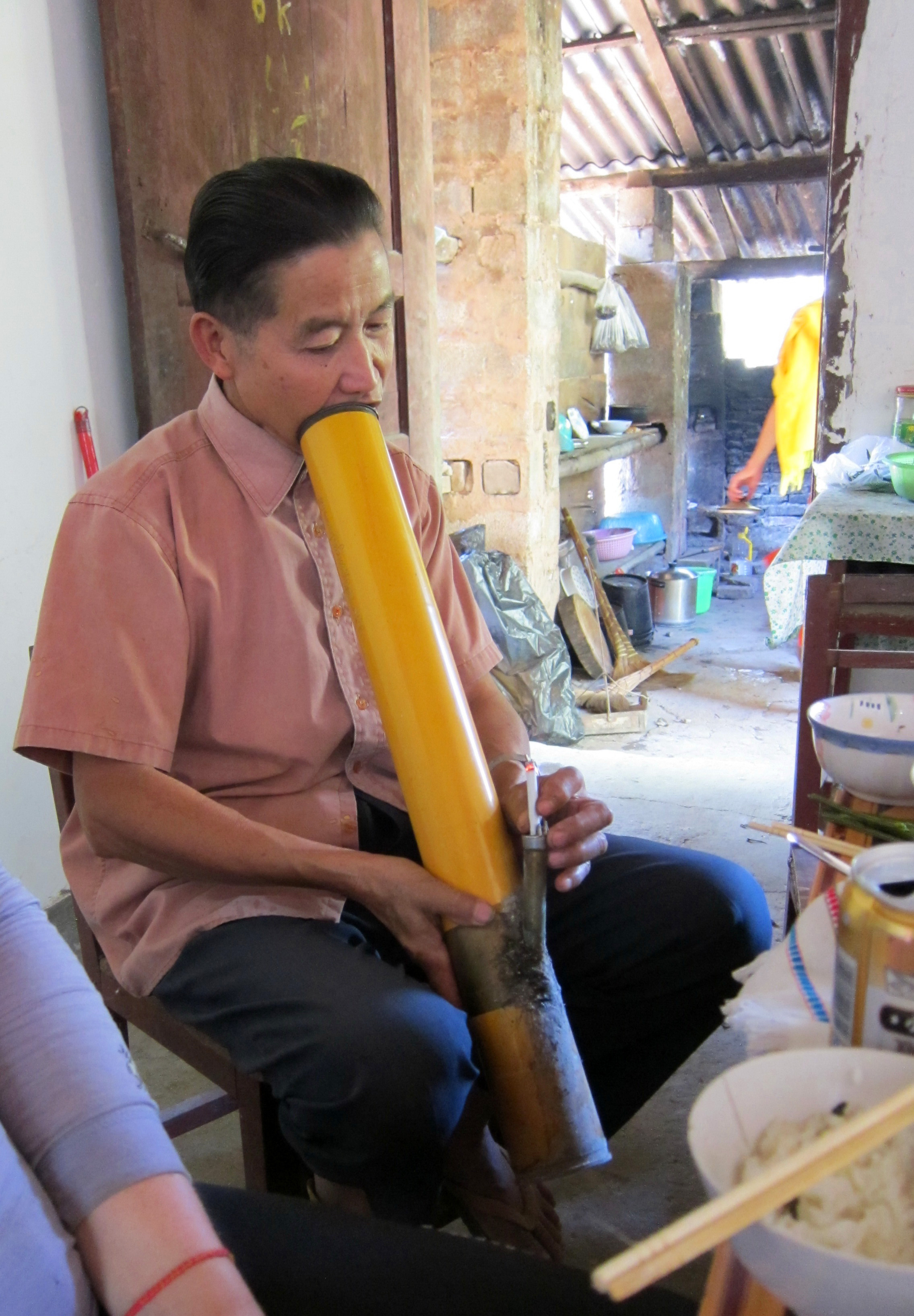
When everyone had eaten their fill, it was time for a second beer and smoking. Chandler and I do not smoke cigarettes but intrigued by what the men were doing. The locals were smoking their cigarettes out of long acrylic bongs which neither of us had ever seen before… Finally, the time had come for us to continue on our way. We bade everyone goodbye, snapped a few pictures and left.

IMG_3411

That’s one way to smoke a cigarette

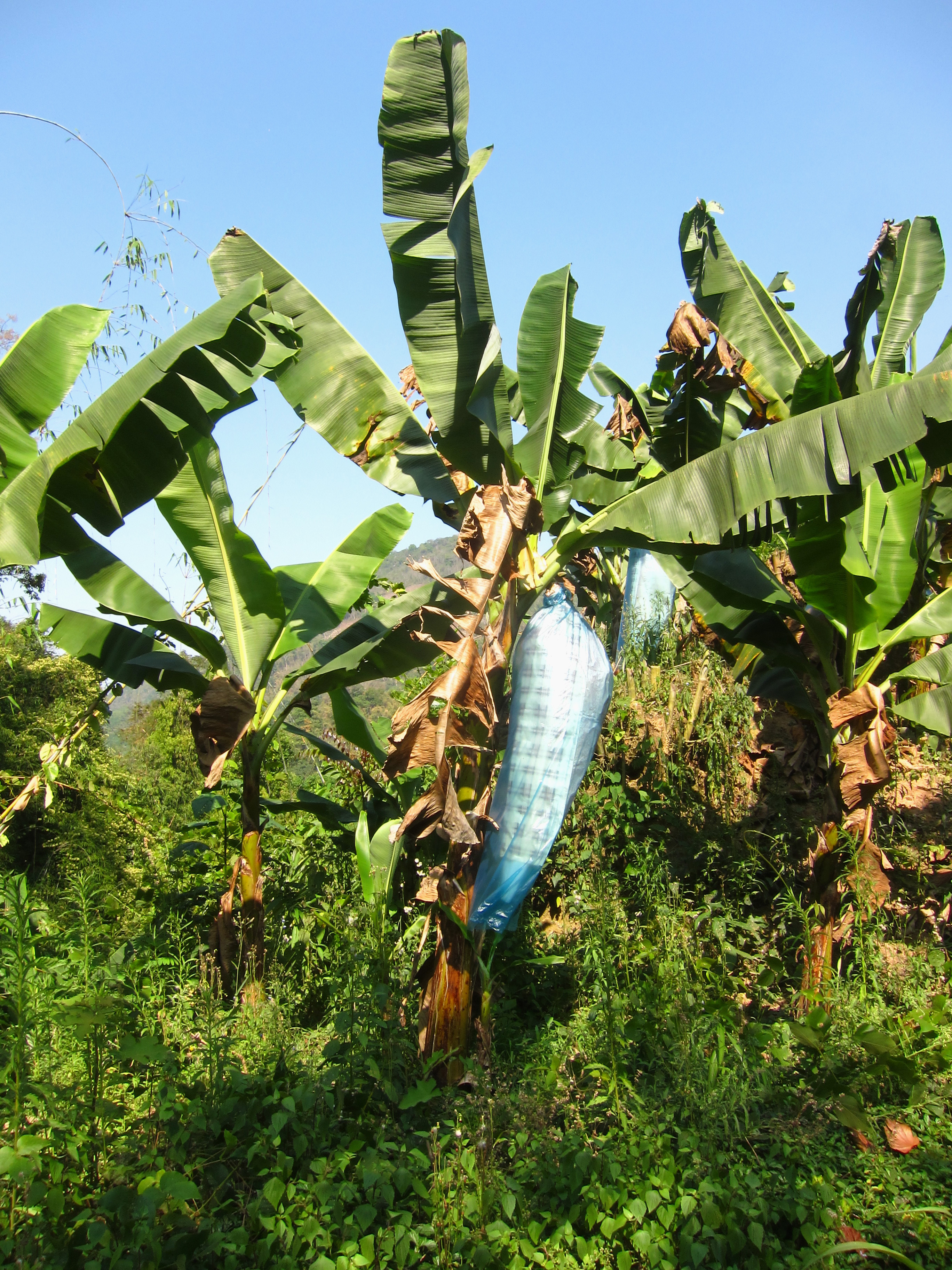
The rest of the day was nice, even though we started really late, in the heat of the day. We continued on the old highway, which had almost no traffic and ample shade. It felt like we were riding on one massive unpopular bike path. There was another big pass to climb and descend. We passed by a number of banana plantations with the bananas all wrapped up in layers tissue paper and plastic bags. We reached Menglun around 3 pm and checked into the nicest hotel the city had to offer, also the only hotel we could find with enough room in the lobby to store the bikes.

IMG_3434

Bananas in pajamas

All the street food was meat in one form or another, so we went to the supermarket and decided to try some American classics, but Chinese style: potato chips and cookies. There were tons of other products in the store, but we couldn’t figure out what most of them were. The cookies were supposed to be similar to Oreos but tasted like very burnt soybean oil and literally had to be spit out in the garbage. The potato chips were corn flavored which we hoped would be similar to fritos but they ended up tasting like artificial creamed corn. Bad, just terrible and weird and very bad. Better luck next time.

IMG_3442

Mmm, yummy potato chips

We couldn’t figure out how to work the internet in the room, so we just watched the English language news channel and went to sleep.