A week of museums

September 20 – 25, 2013

Our one night of babysitting turned into almost a week when my sister’s nanny had a death in the family and had to return to France. So, Chandler and I got to play nanny to the kids. It was really wonderful to spend so much time with my niece and nephew because they are incredibly funny, intelligent and sweet children. Our evenings were spent enjoying relaxing meals and conversation with Alyssa and Martin after the kids went to sleep.

Our days all had a similar pattern. Someone would drop Luc off at school then Chandler, Lea and I would take the tube to one of London’s free museums. We would spend a few hours wandering around the museum looking at stuff or chasing Lea before leaving to get back to school to pick up Luc. Generally, Chandler would hang out with Lea while I took Luc to his various after school activities. After tennis lessons or trampoline, we had some time at home to hang out until Alyssa and Martin returned.

Trebuchet outside the Tower of London

Trebuchet outside the Tower of London

Palace guard

Palace guard

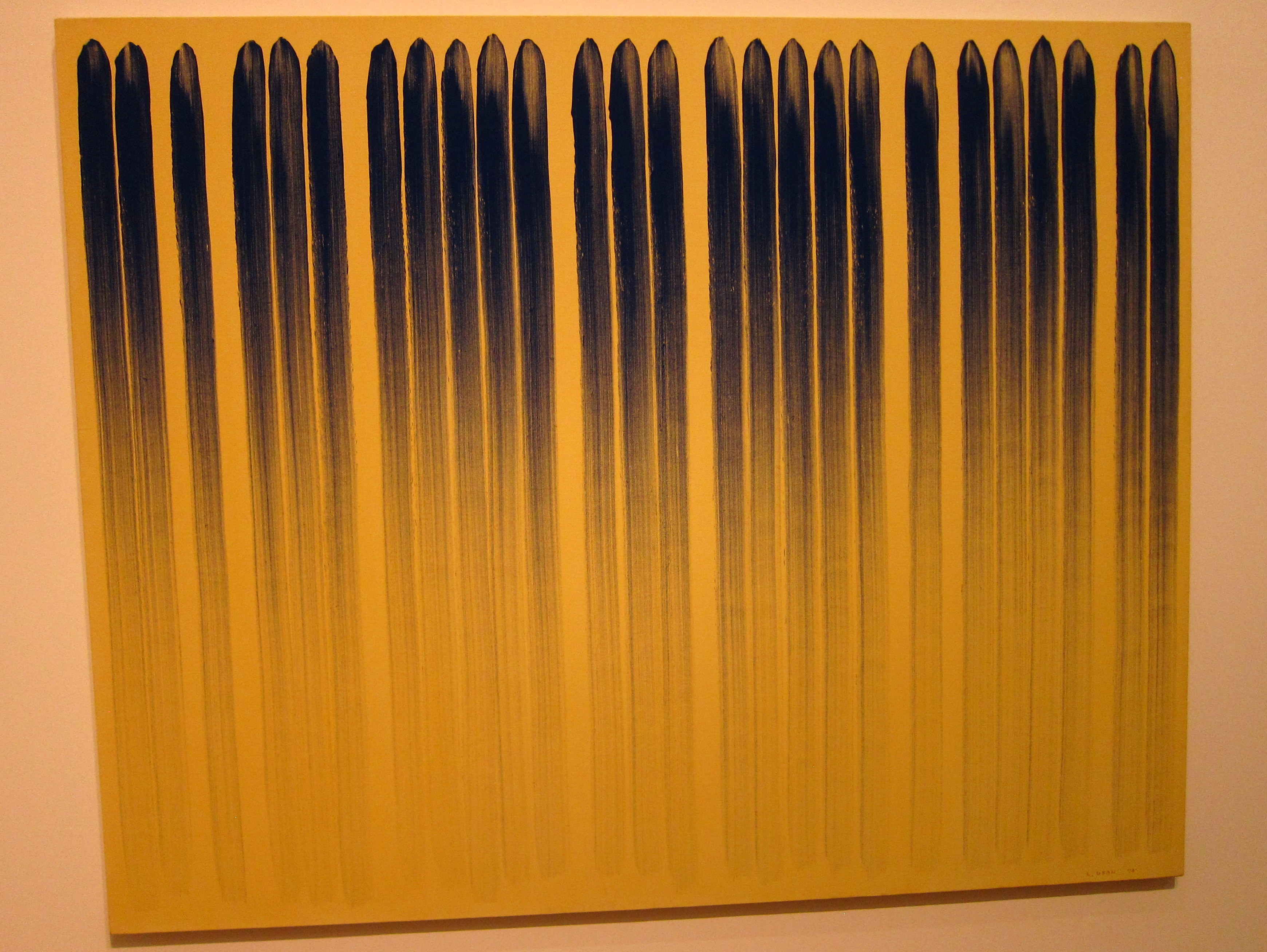
Painting at the Tate Museum

Painting at the Tate Museum

IMG_6910

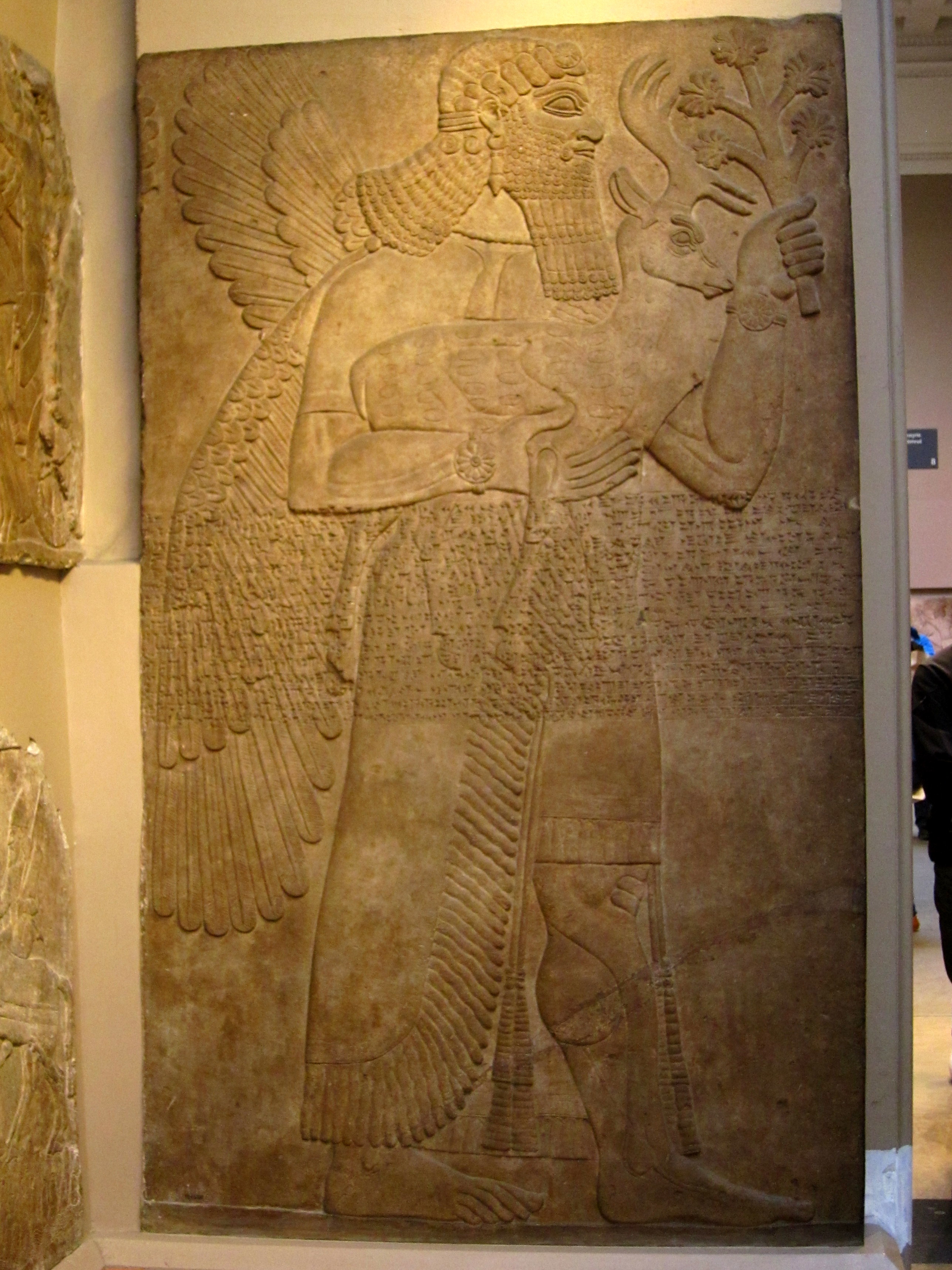
Assyrian from about 865 – 860BC


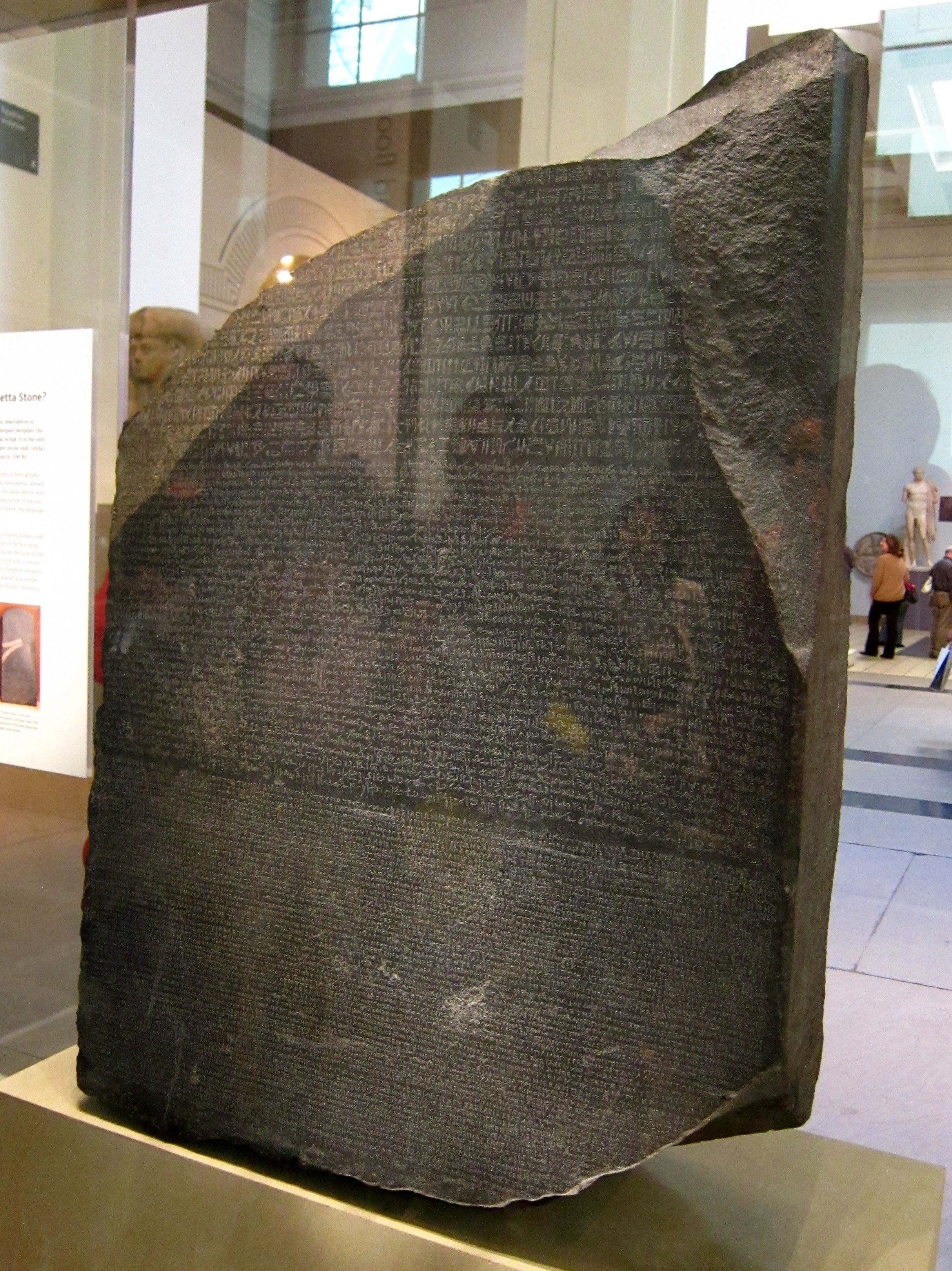
The Rosetta Stone

The Rosetta Stone

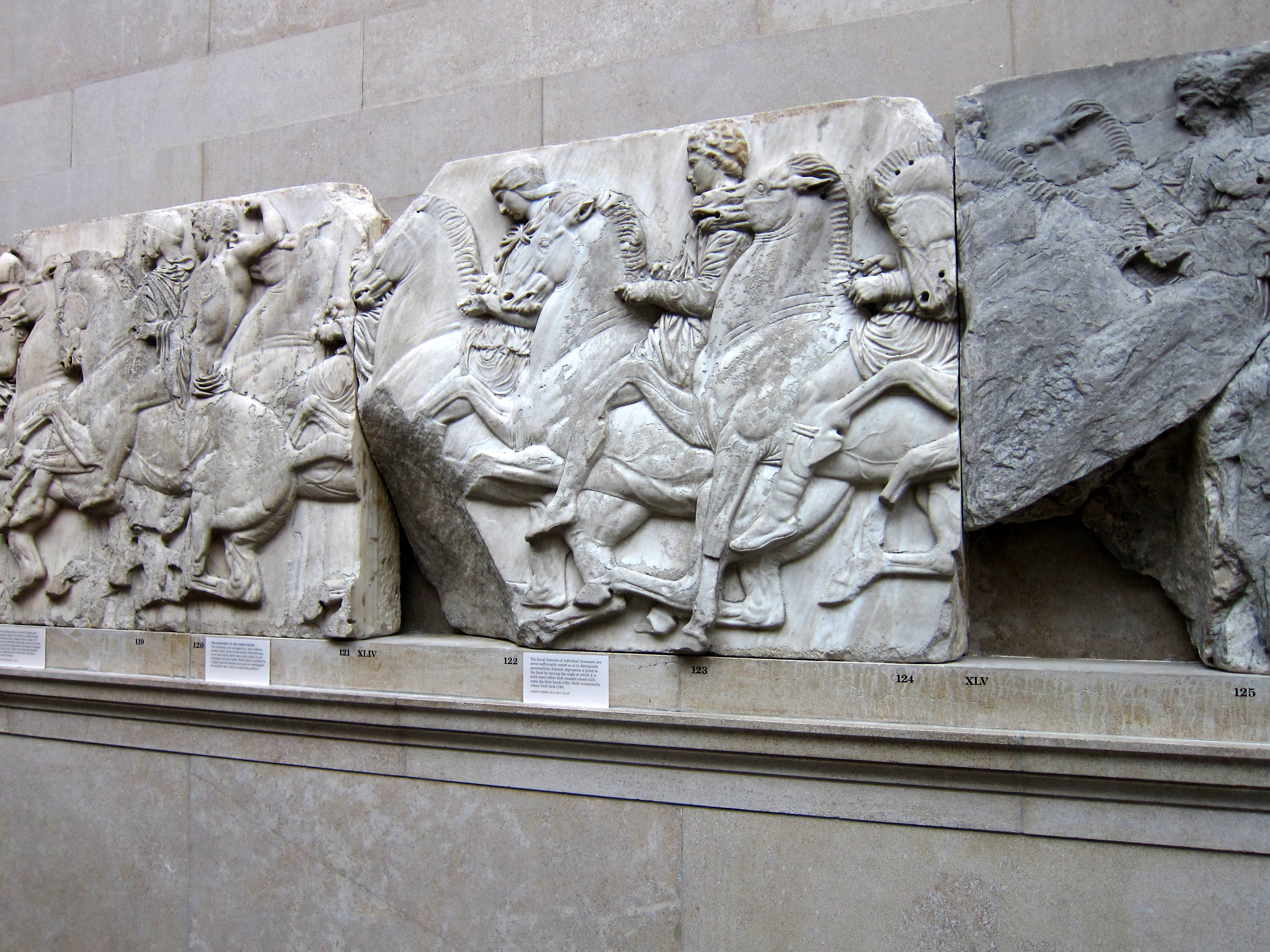
Part of the Parthenon

Part of the Parthenon

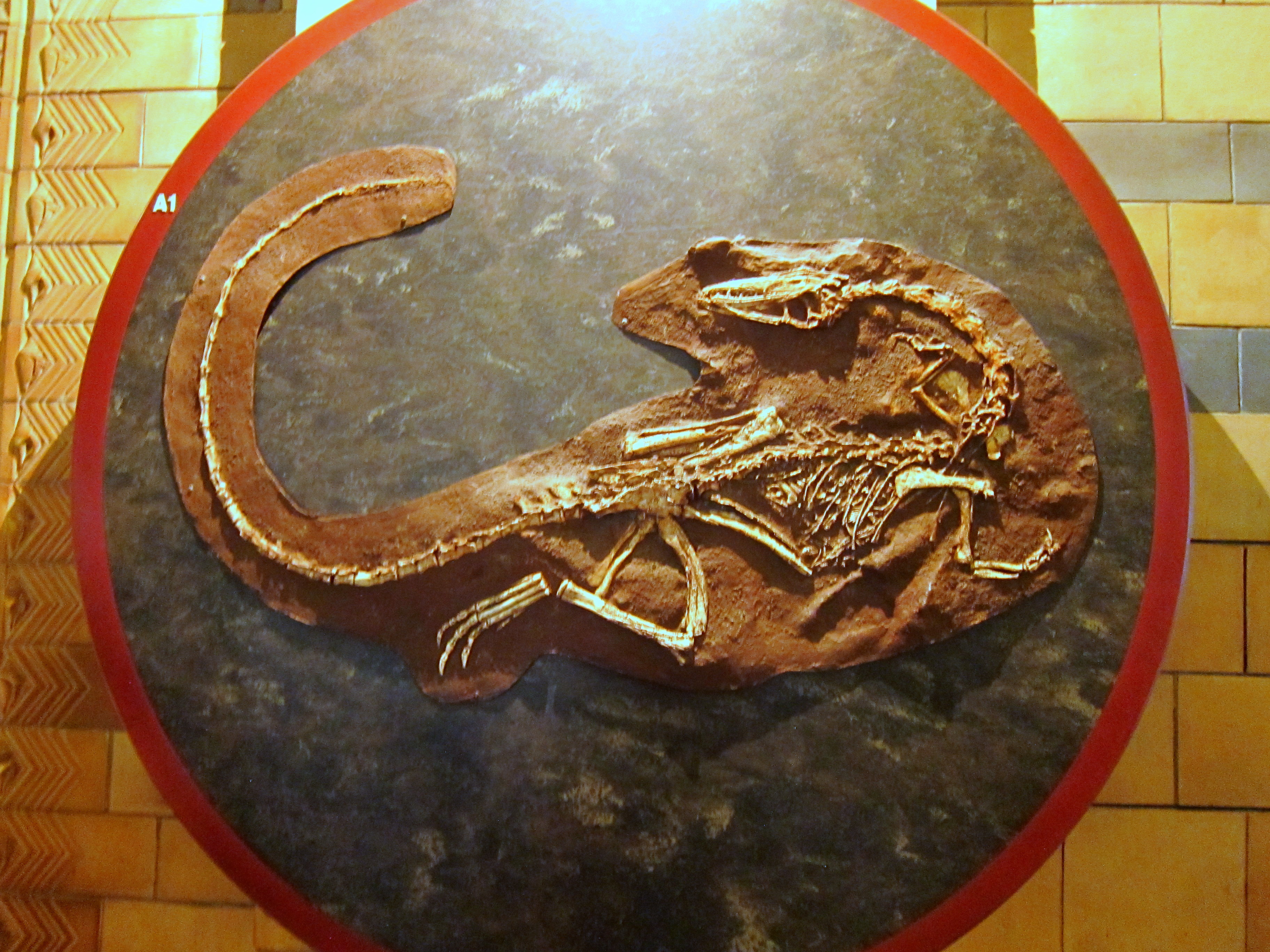
Dinosaur skeleton

Dinosaur skeleton

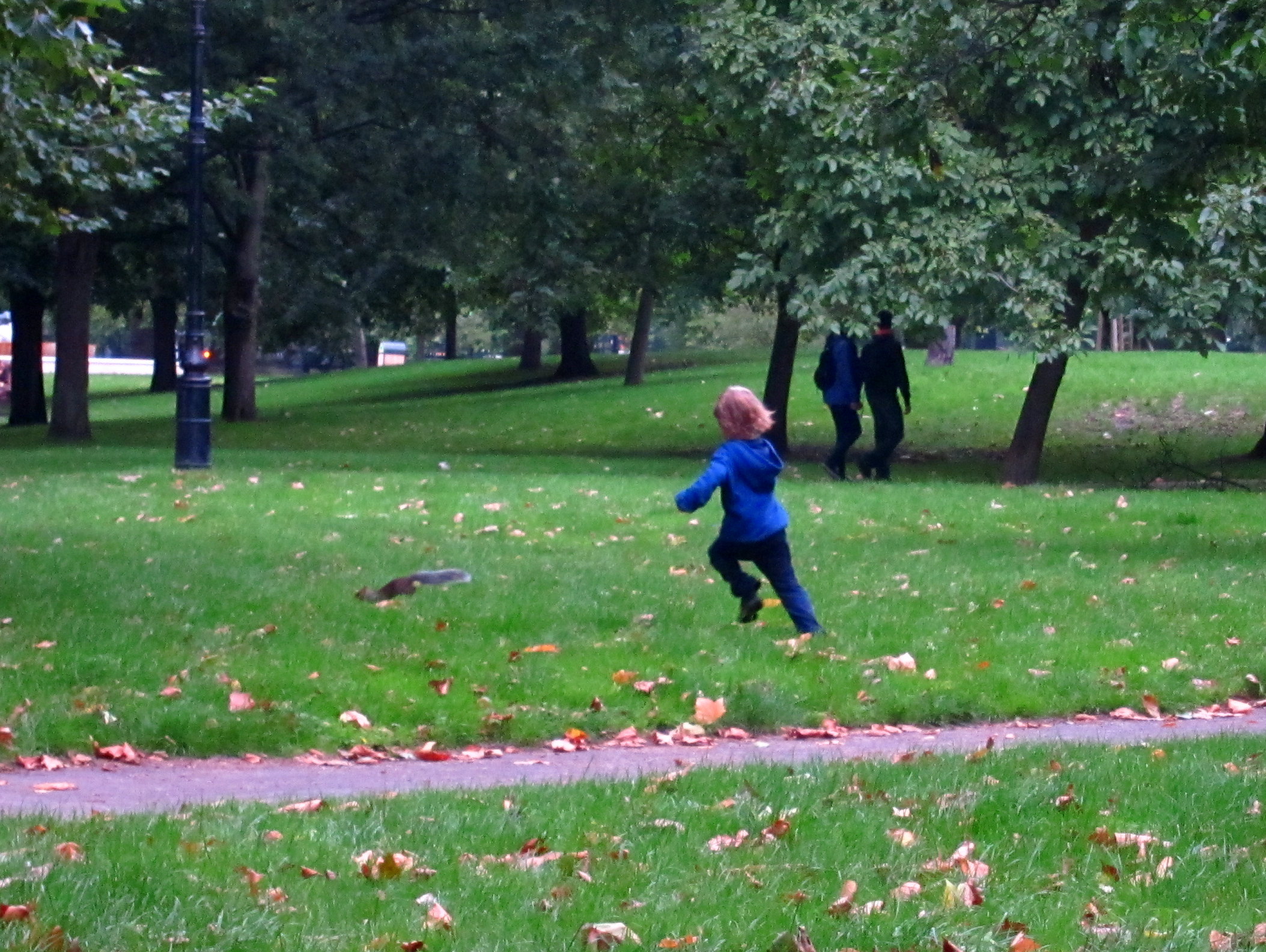
Luc, squirrel hunter

Luc, squirrel hunter

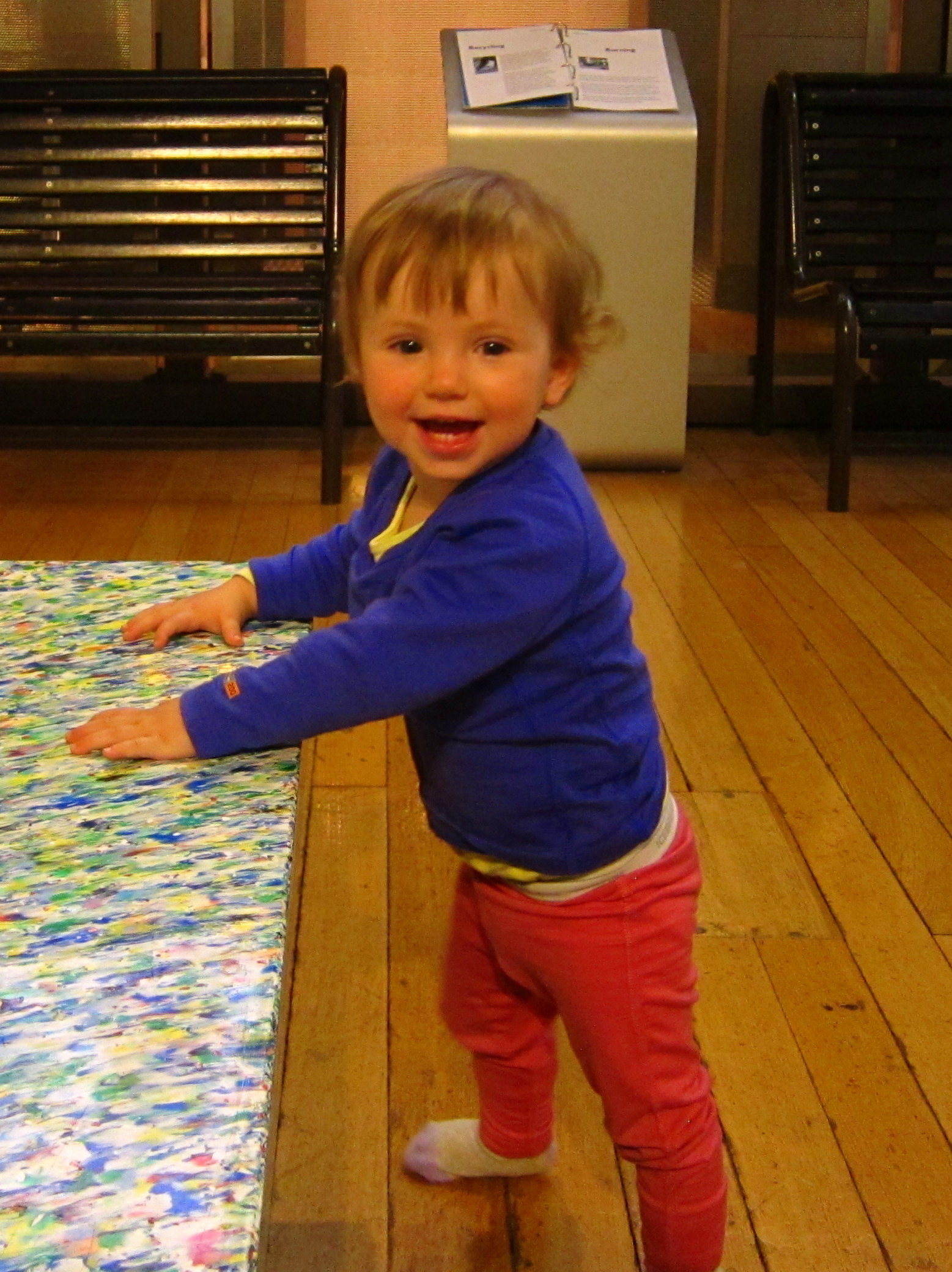
Lea having a good time

Lea having a good time

A change of pace

September 18 – 19, 2013

All of the sudden, we found ourselves on a train to La Rochelle and then on a plane over the English Channel. This rather abrupt departure from our original travel plans arose because my sister Alyssa needed an overnight babysitter in London. This was an attractive opportunity because we were on the brink of unintentionally being illegal immigrants in Europe!

Here’s how that happened: beware it’s a bunch of bureaucratic mumbo-jumbo so feel free to skim. It turns out there is this thing called the Schengen Zone which is a collection of European countries (which predates the European Union) who dissolved border controls between themselves while unifying the border controls between Schengen and non-Schengen countries. So no border guards between Germany and the Netherlands for example. As US citizens we don’t need a visa in advance of traveling in the Schengen Zone, but the catch is: in any 6 month window we can only be in the Schengen Zone for 3 cumulative months. We looked at the calendar and the map and realized that if we stuck around in France we’d over stay our time by two weeks and technically be illegal immigrants subject to fines, deportation and a ban from future travel in the Schengen Zone. The actual degree of enforcement of the rules is pretty unclear though and really up to the immigration officer who checks our passport when departing. We read about a few people flying out of Switzerland who were hit with over $1,000 in fines and deported for being over by just a couple days. Luckily, the UK is not part of the Schengen Zone, so we could just hide out there for a couple of weeks then come back and not have to worry about anything.

We spent the entire day getting to London, but it was worth it. Especially since Alyssa ordered delicious Indian food when we arrived at her flat.

The next day we laid around the flat doing nothing. I had picked up a little cold en-route, so we didn’t feel like venturing too far. It felt good to be lazy after a month of good, solid work.

Around the farm

August 24 – September 18, 2013

Feeding, milking, herding  and making cheese were just the basic jobs that needed to be done every day to keep things moving. As with most farms, there was a long list of projects that needed attention. Once we had the basics down, we were able to tackle some of the project work each afternoon.

Once she found out that we enjoy building, she put us to good use. We helped her friend add an addition to on of the barns for the young. We also re-roofed the horse’s shelter and built her a little wood shed.

The barn addition we helped build

The barn addition we helped build

We also experienced death. Two goats died while we were there, both from sickness. One of the billies died from worms and diarrhea, so we got to help vaccinate all the remaining billies. This entailed Chandler putting the billies in a modified headlock, while I filled syringes and Alex performed the shots.

Vaccinations

Vaccinations

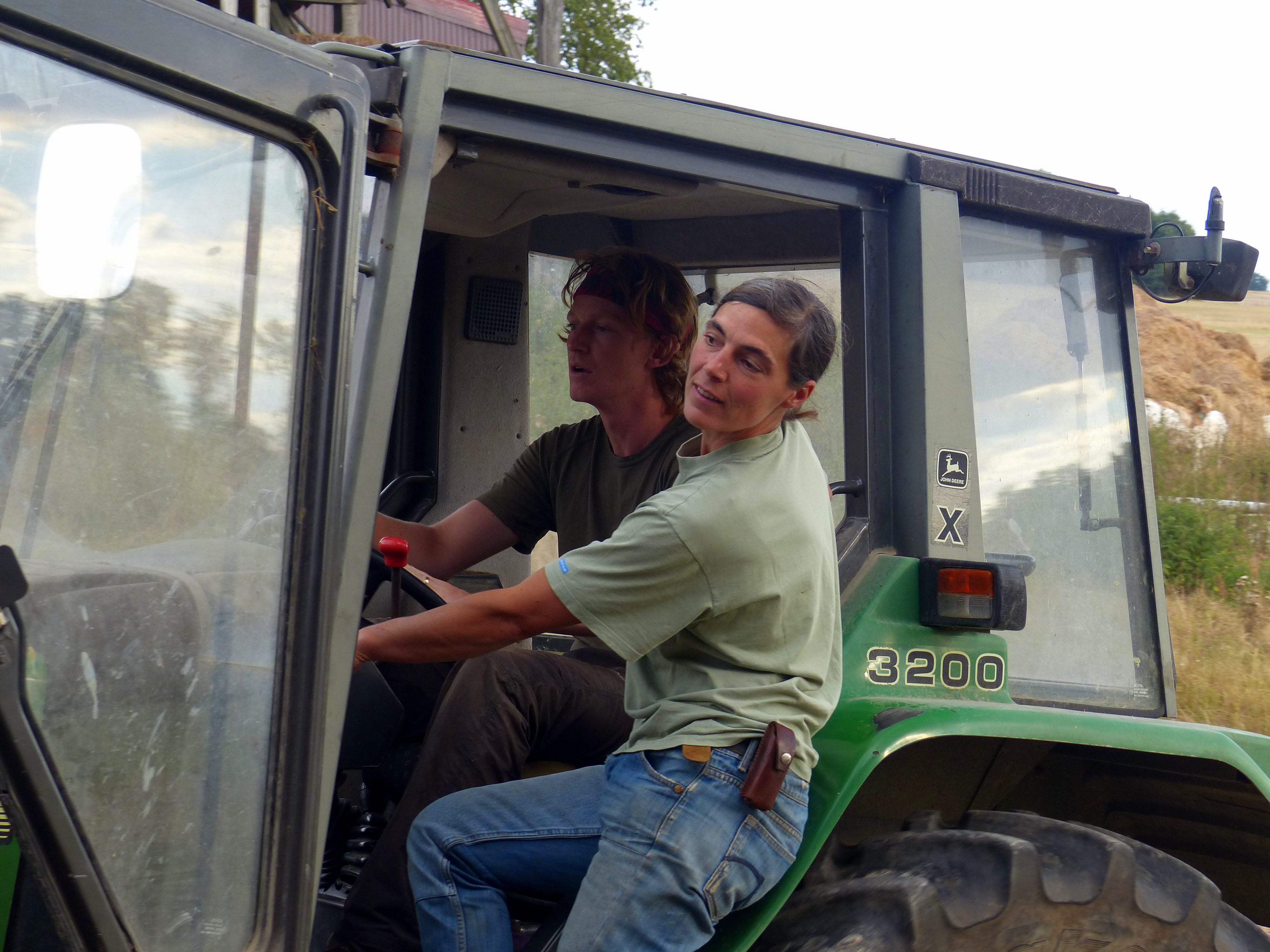
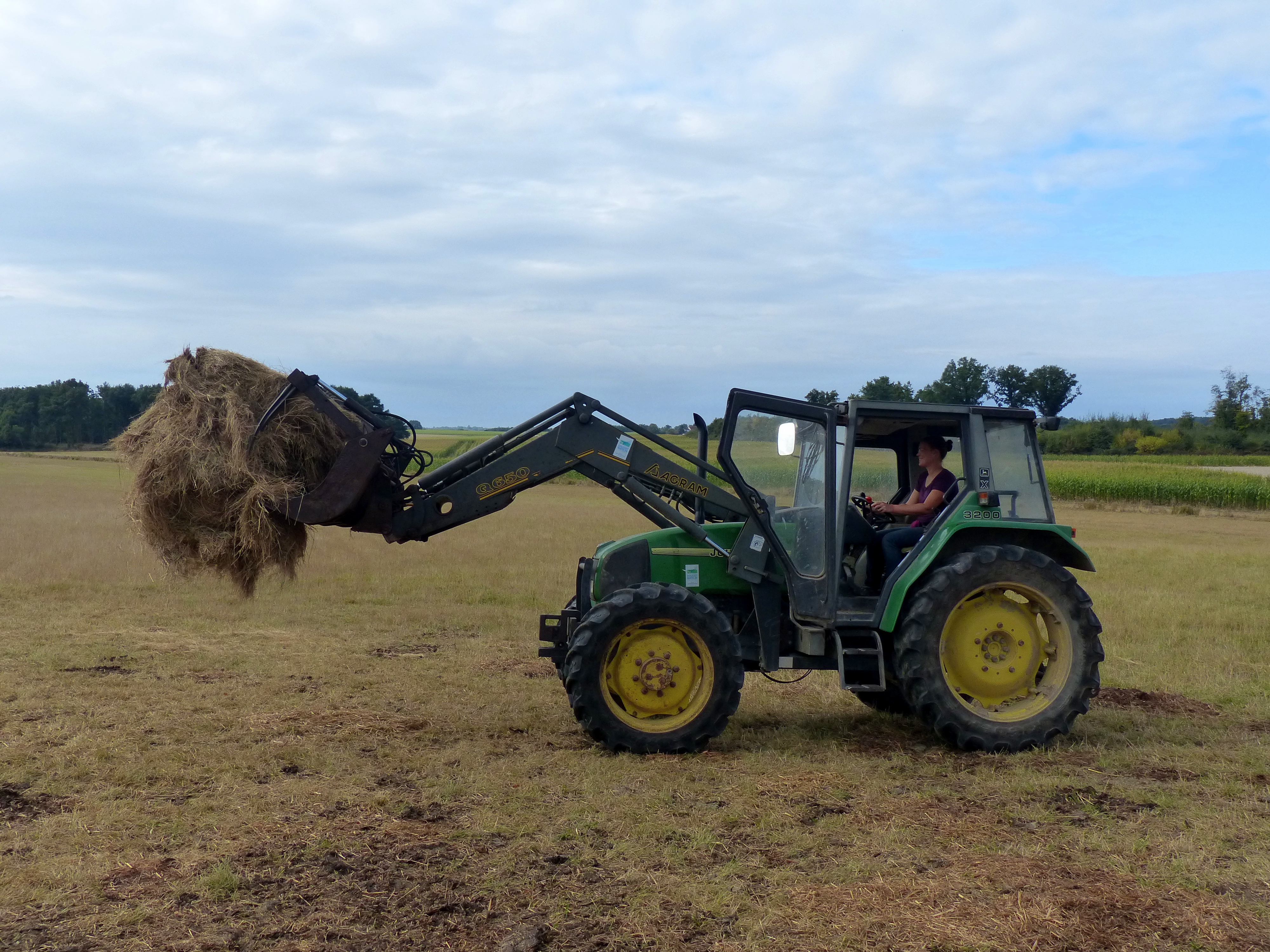
A big highlight for us was learning to drive the tractor. Alex had mentioned it casually after about a week, but we didn’t take her up on the offer for another week. Basically, we just moved rotten hay bales to the compost. Not that exciting, but we thought it was cool. The tractor was pretty easy to learn, the joystick moves one way to raise and lower the bucket and moves another way to open and close it. Balance was important, because the tractor could tip over if too heavily loaded and the bucket too high.

Tractor lesson with Alex

Tractor lesson with Alex

Jenny and the tractor

Jenny and the tractor

Our month on the farm was a really wonderful experience. We learned a lot about running and maintaining a goat farm. Now, instead of talking about owning animals, we have a decent idea of what that would actually entail.

Chandler and his herding cat

Chandler and his herding cat

The ladies

August 24 – September 18, 2013

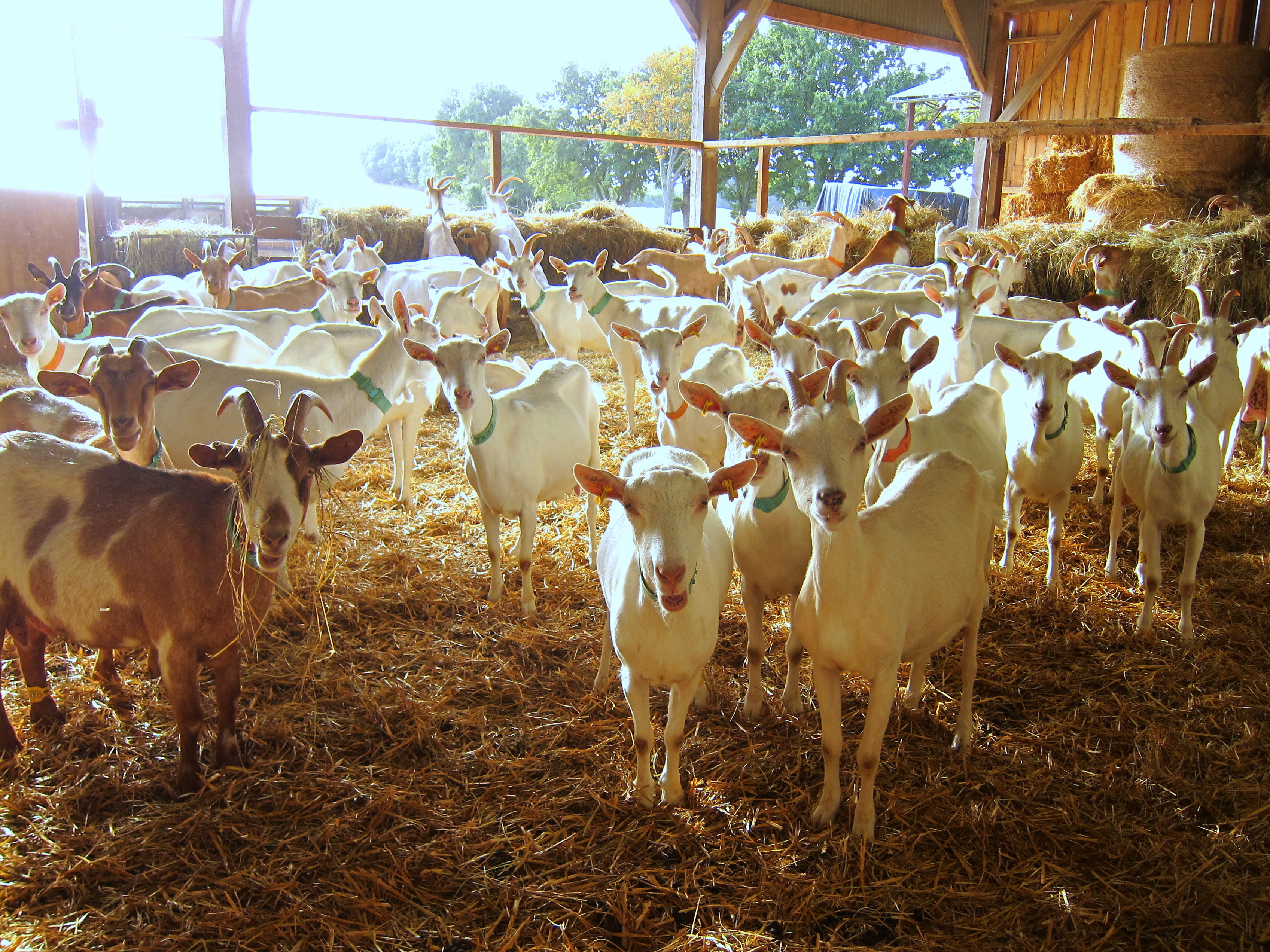
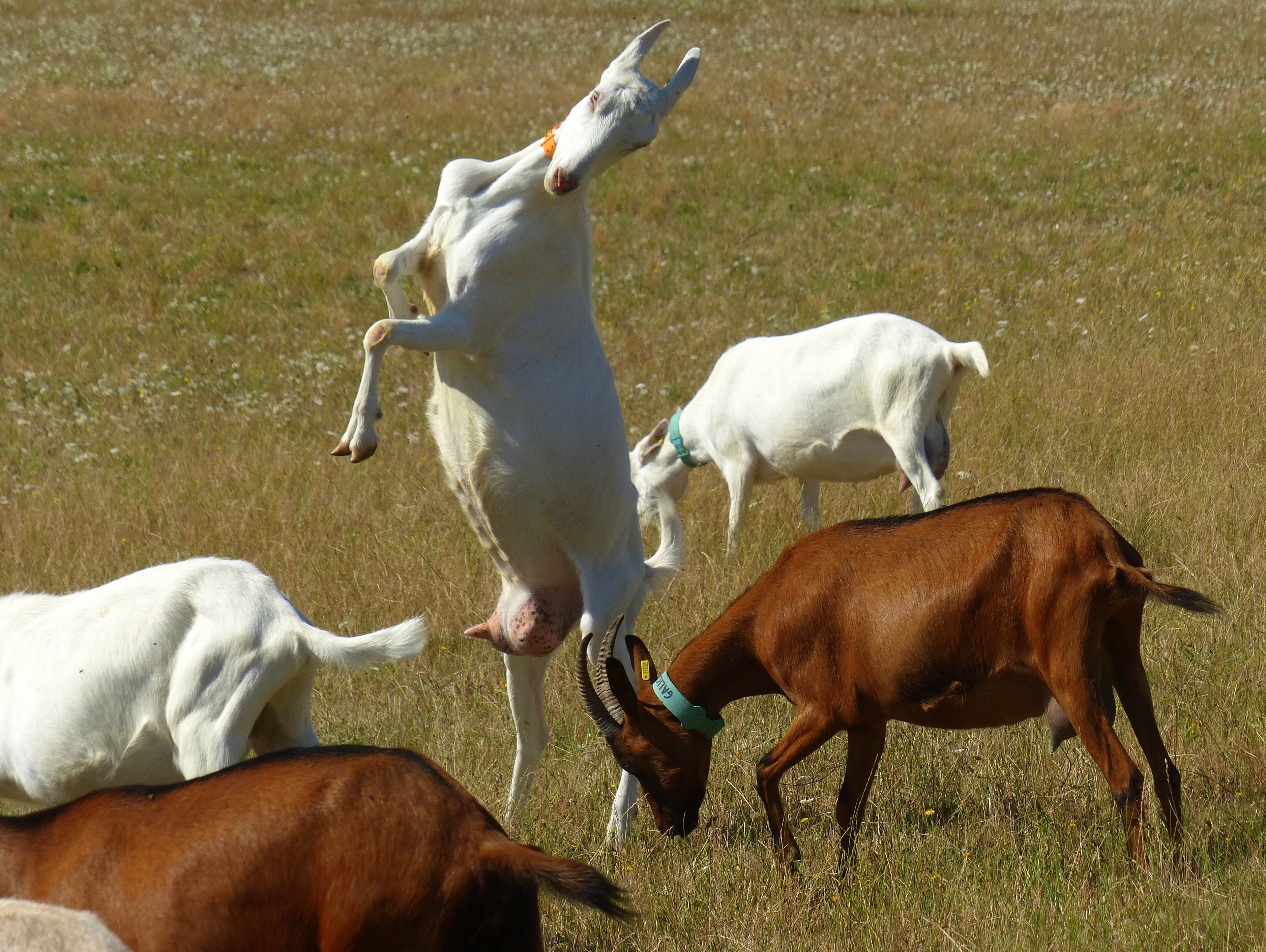
There were lots of goats, but we spent most of our time with the milkers and their babies. Alex has 50 active milkers, 19 nursing mamas and a handful of 5 month olds that all live together in the main barn. Normally, mothers and babies are separated at birth, but Alex doesn’t need the extra milk, so for now, she lets the babies stay with their mamas.

The ladies

The ladies

A little milking helper

A little milking helper

When we first started work on the farm, we could barely tell one white goat from another white goat, however it quickly became obvious that each goat had her own personality. Some of the goats were very slow to warm up to us, others were mischievous and caused trouble while others would have made perfect cuddly pets. Alex has also given each goat a different name with each generation starting with a different letter. By the end we knew maybe a third of them by name, but a few we ended up giving nicknames that stuck for us, like Big Mama.

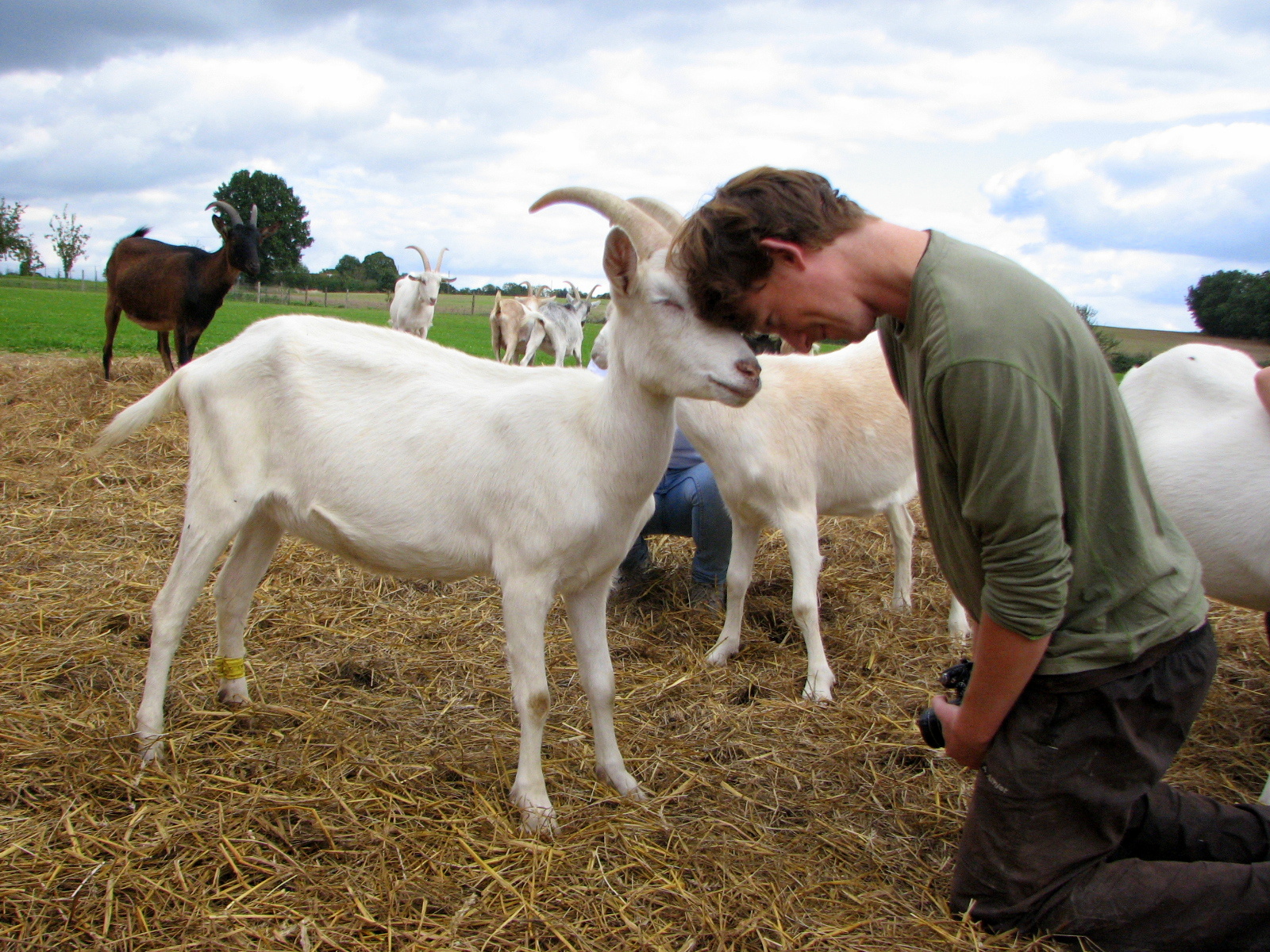
Affectionate baby

Affectionate baby

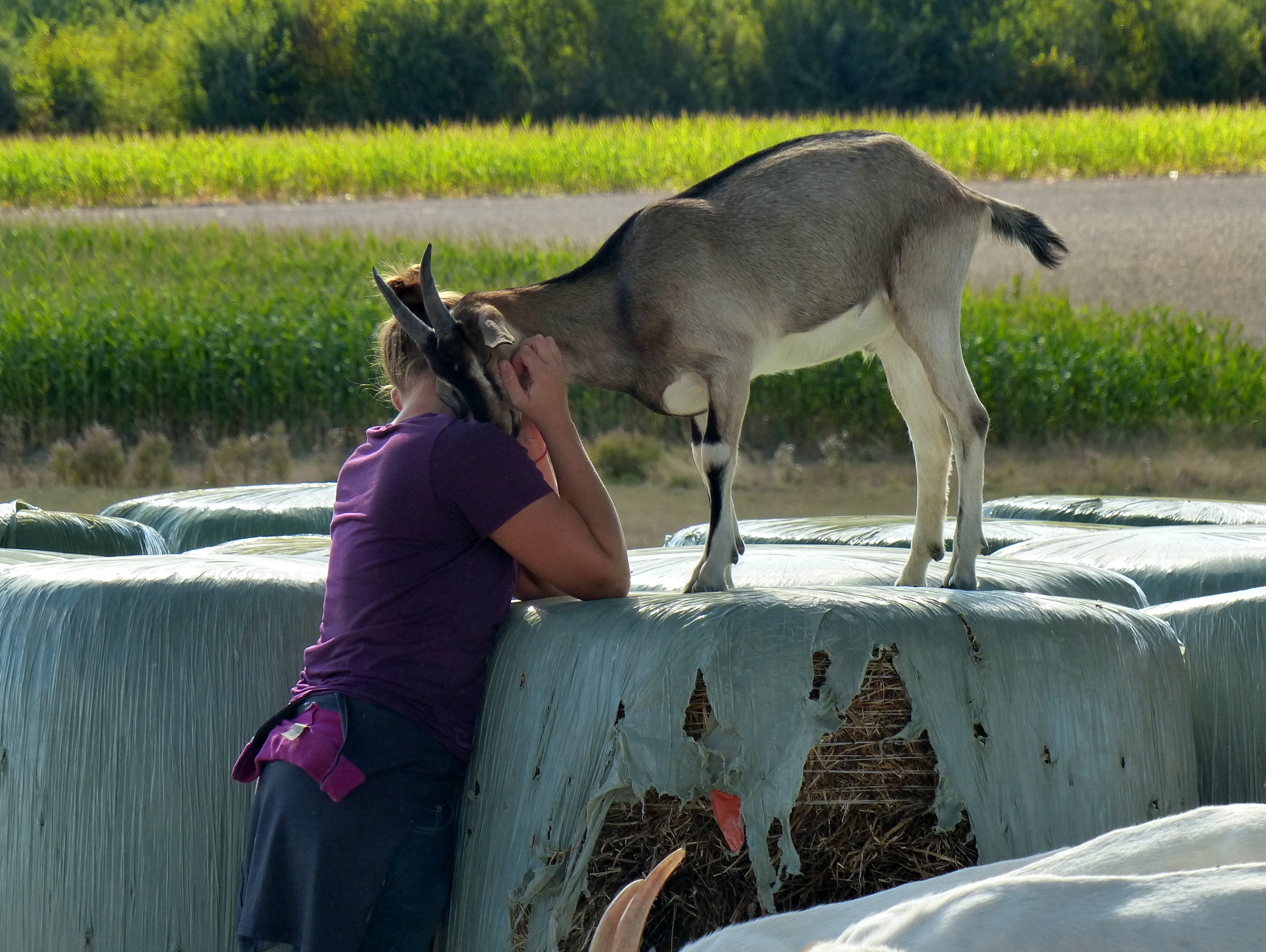
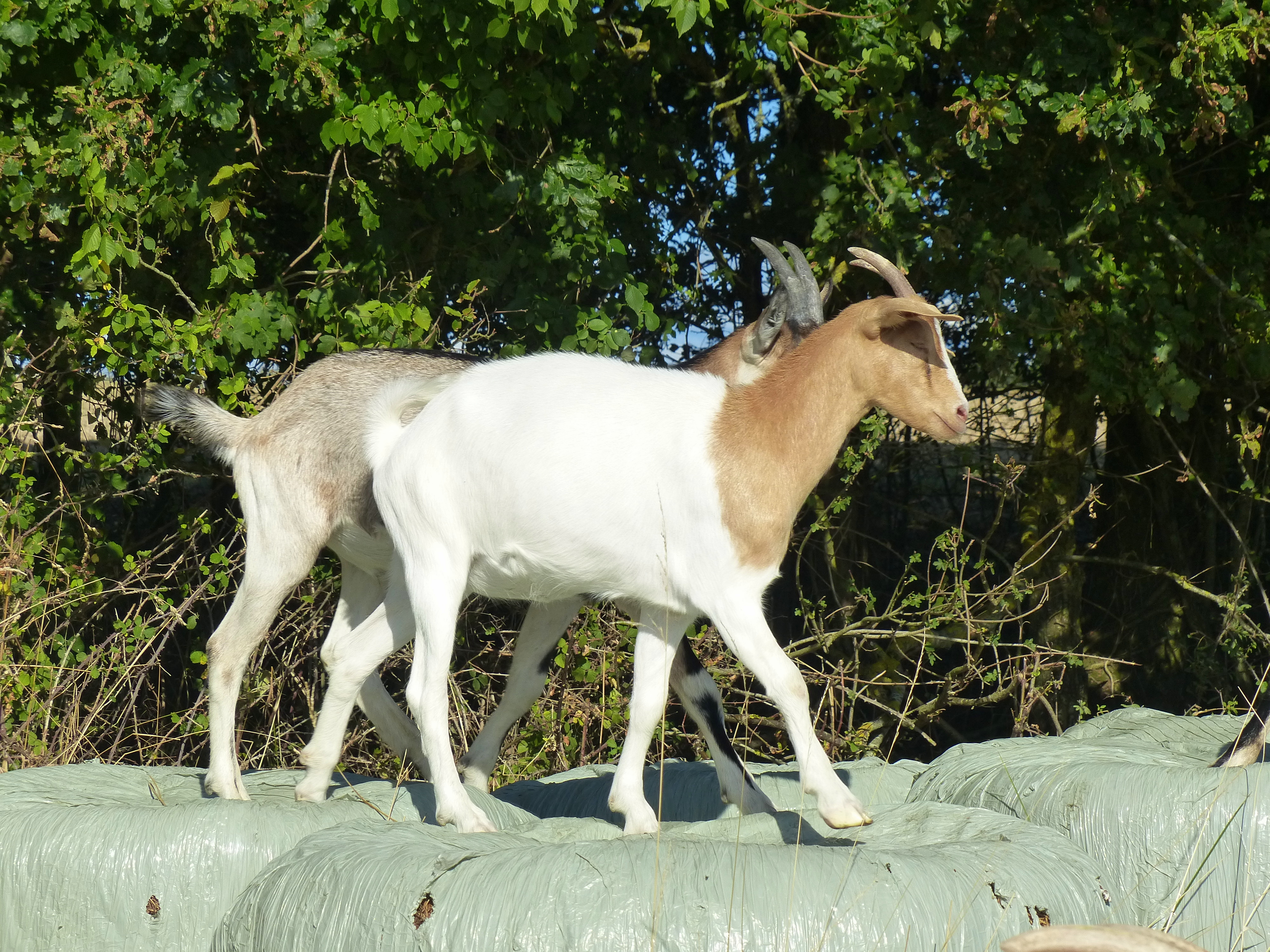
Impatience on a hay bale

Impatiens on a hay bale

Our time with the goats began with milking and feeding. Each milker received a ration of alfalfa pellets and cereals while we attached the milking machine. There were four goats being milked at a time. Some goats gave a lot of milk, over a liter or so, others gave barely a cup full.

Isatis

Isatis (our favorite)

After lunch, someone played shepherd and spent several hours in the pasture while the ladies grazed. This is when personalities really came out. A few ladies were always leaders of the pack, while a few like Big Mama hung back and just went along with everything. A few were constantly fighting and butting heads with each other. A small group of them were the rebellious/ mischievous ones. They seemed to thrive on the attention and would bolt for the neighbor’s fields even though the fields they were supposed to be in had a lot more grass for them to eat. We spent a lot of time heading off the leaders, and keeping the rest of the herd from bolting after the naughty ones. Other times they were more fun to be in the field with, like when they would follow me around looking for affection or because I would hold down branches so they could eat more leaves.

Incoming

Incoming!

Chandler testing the thickness of his skull

Chandler testing the thickness of his skull

I can honestly say that we really loved the goats, almost like pets. In some ways they were like mellow dogs, who didn’t really listen very well.

The Fromagerie

August 24 – September 18, 2013

One of the fringe benefits of working on an organic goat cheese farm was obviously an unlimited supply of goat cheese. Alex makes some of the best cheese I have ever had in my life. There is a lot of diversity in the flavors, ranging from young, rich and creamy to aged, strong, spicy and super moldy! The cheese has a very distinct flavor, different from a cooked cheese like mozzarella or cheddar.

The process of making cheese began once we were done milking the ladies. The raw milk was brought into the fromagerie and left to settle while we washed our hands and donned our lab coats, rubber boots and hairnets. Once the milk was settled and the quantity measured, it was time to be filtered.

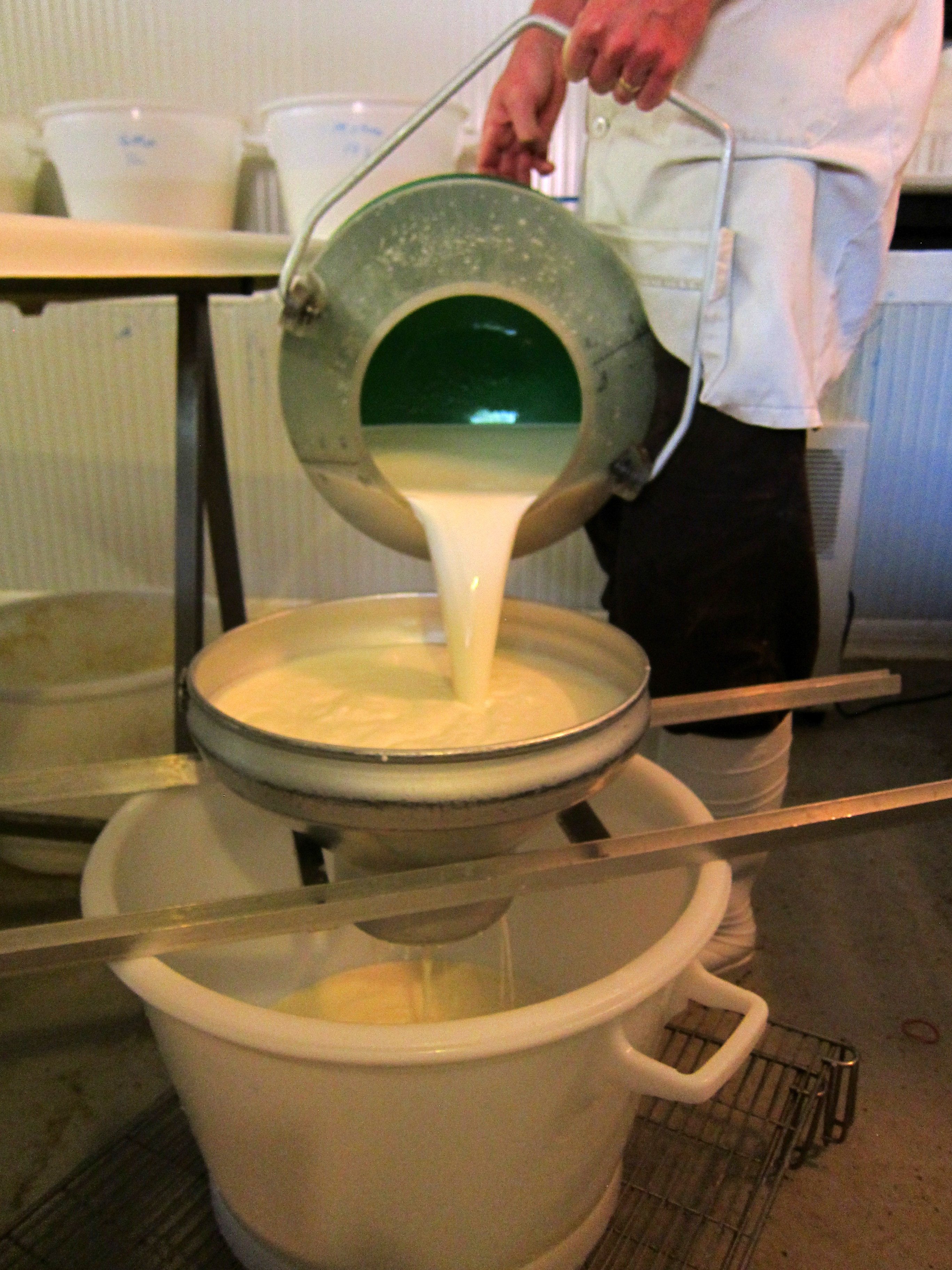
The filtration was required to catch any hair, dirt or flies that could be in the milk, mainly debris from the field that were stuck on the goat’s teats. The fresh milk was poured into a large funnel with three metal filters. Between each metal filter was a paper filter to ensure everything was caught. The milk was left for a while so the froth would dissipate.

Filtering the milk

Filtering the milk

Rennet was added to the filtered milk and allowed to sit for at least 12 hours. One of the nice things about Alex’s cheese was that she used vegan rennet derived from fungus. This process was distinct from other large scale processes where the milk is usually refrigerated and then processed in larger batches. Alex told us such large swings in temperature significantly affect the behavior of the living part of the milk and changed the resulting cheese flavors.

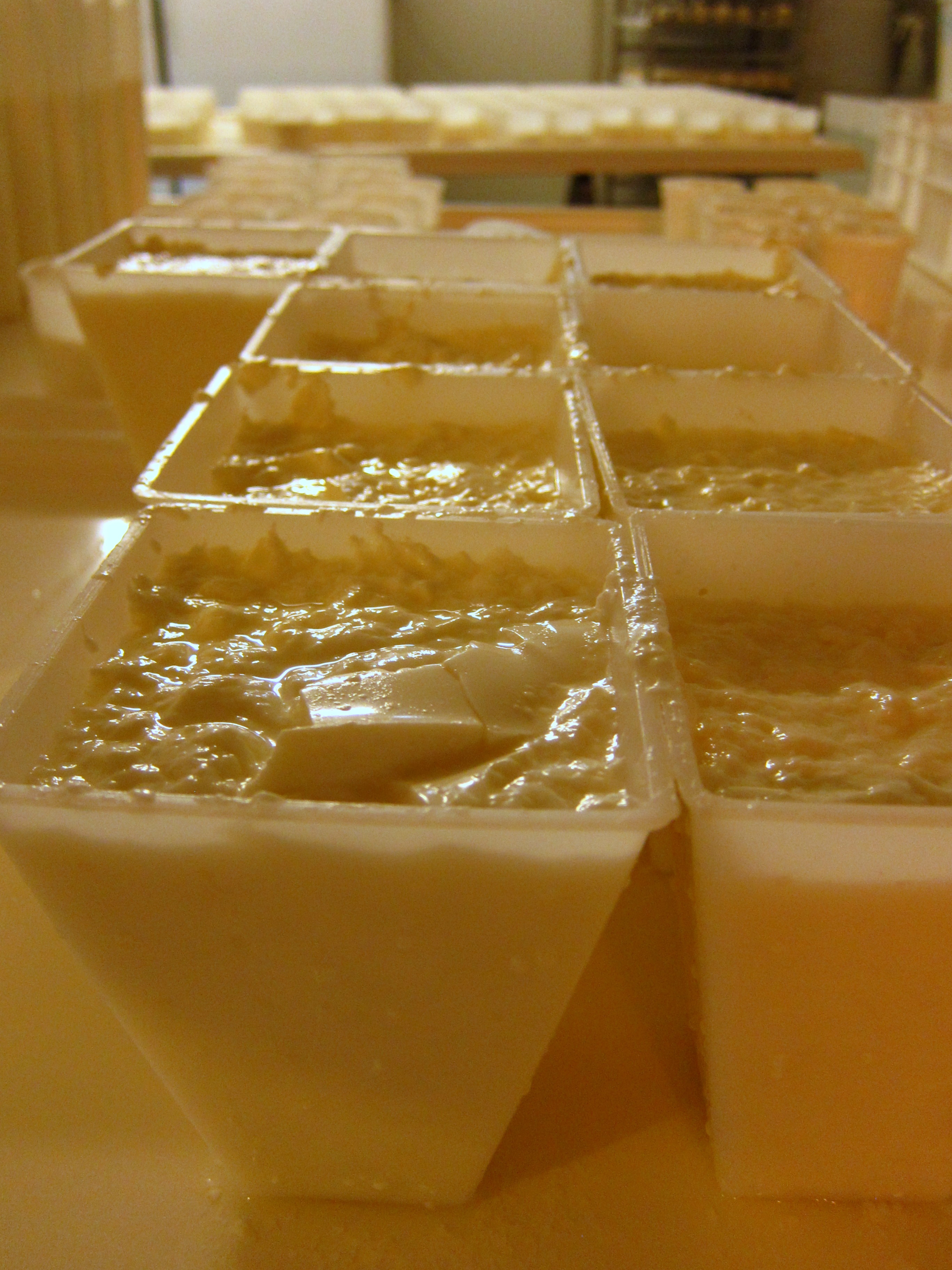
The whey and the curd took about 24 hours to separate from each other. The whey was drained off and we scooped the curd into one of three forms: buche (log shaped), crottin (hockey puck sized) or the pyramid (actually a truncated pyramid shape which purportedly was in homage to Napoleon Bonaparte’s successful military campaigns in northern Africa) .
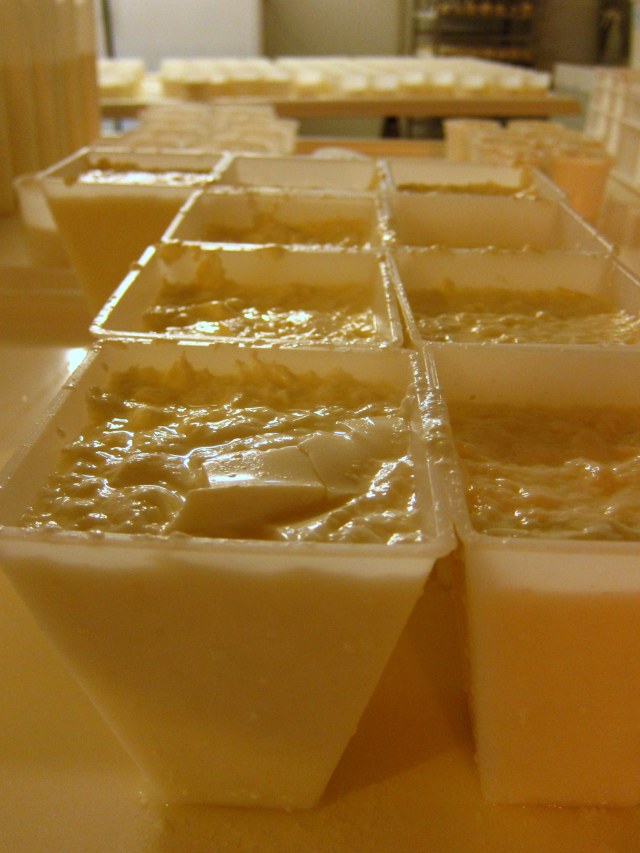
Pyramid forms

Pyramid forms

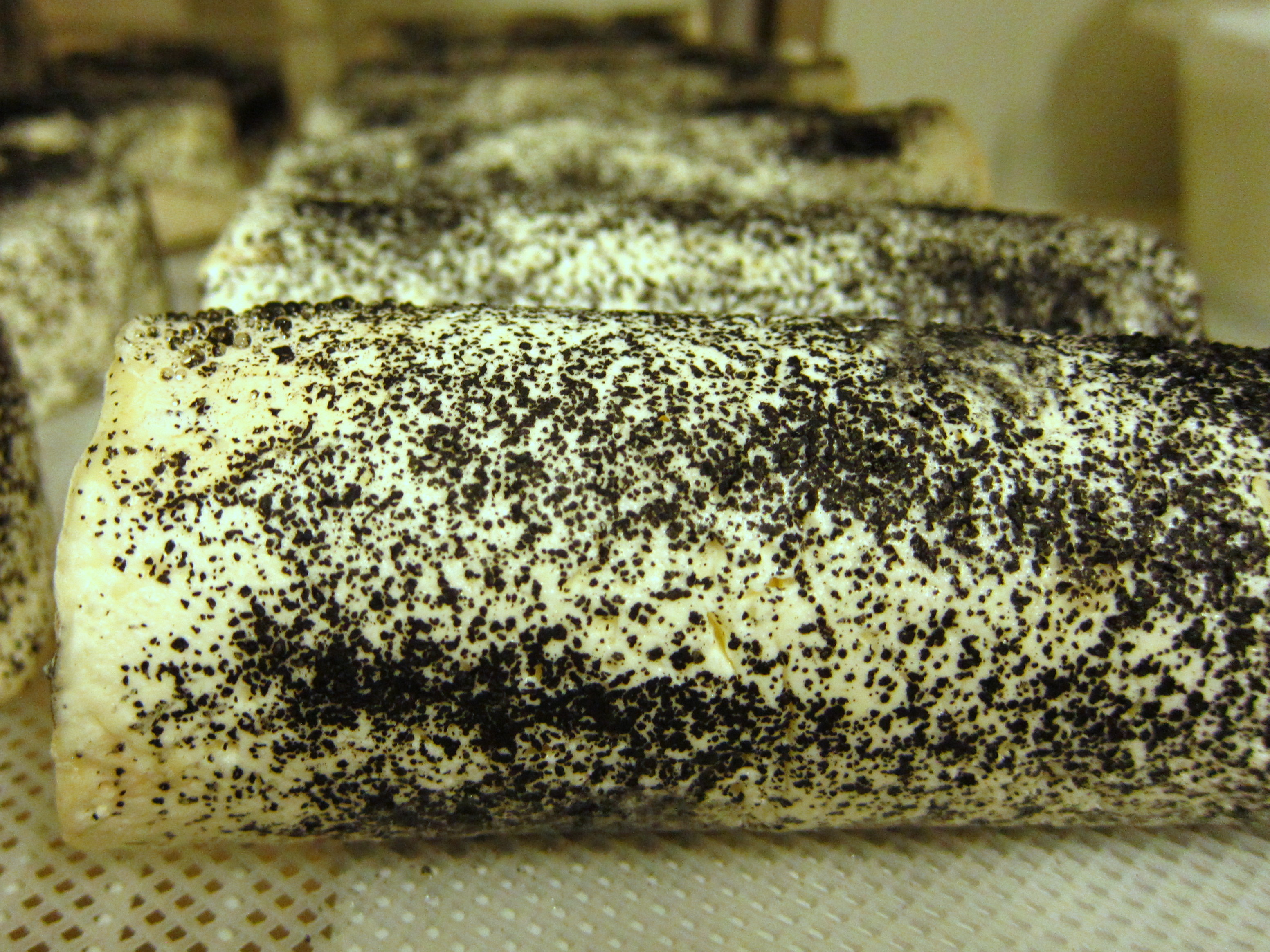
The curd would remain in the form for a few days while all excess whey was pressed out by gravity. Once ready, the cheese was removed from the form, salted for flavor and allowed to dry in front of a fan for two days. The buche and pyramid forms were also sprinkled with ash from a specific tree. Unfortunately, Alex didn’t know the name is English and we couldn’t remember the French name.
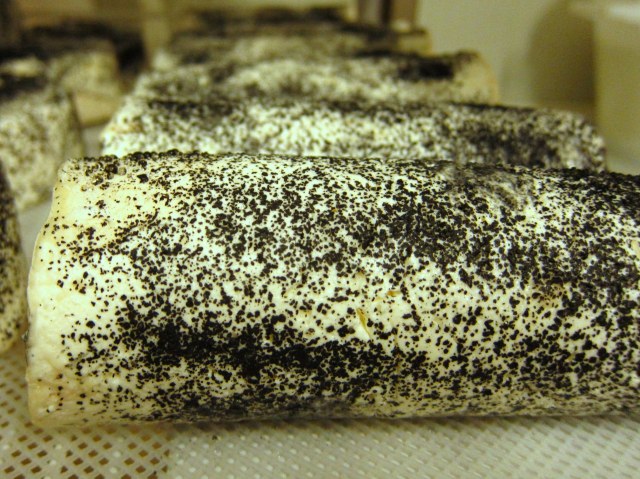
Buche covered in ash

Buche covered in ash

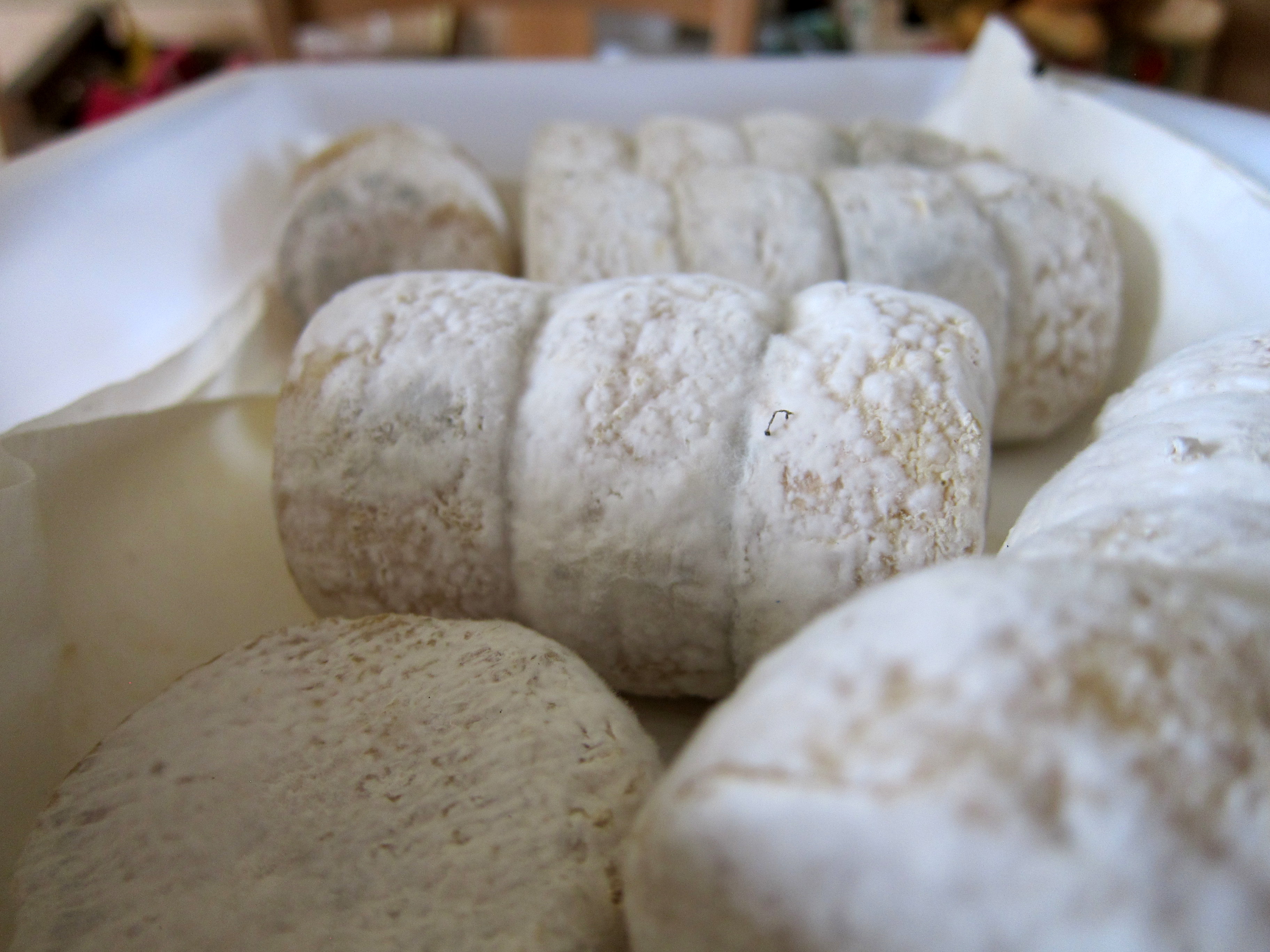
While drying out in front of the fan, mold began to develop. While young cheese was delicious, the petit bleu, the cheese covered in blue mold was the best. The cheese was eventually transferred to a refrigerator, where it would stay until purchased. Alex sold her cheese at several farmer’s markets or to people who stopped by the farm.
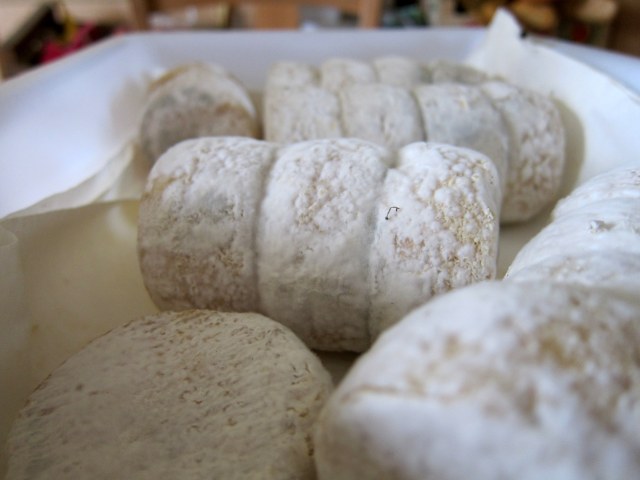
Delicious moldy cheese

Delicious moldy cheese

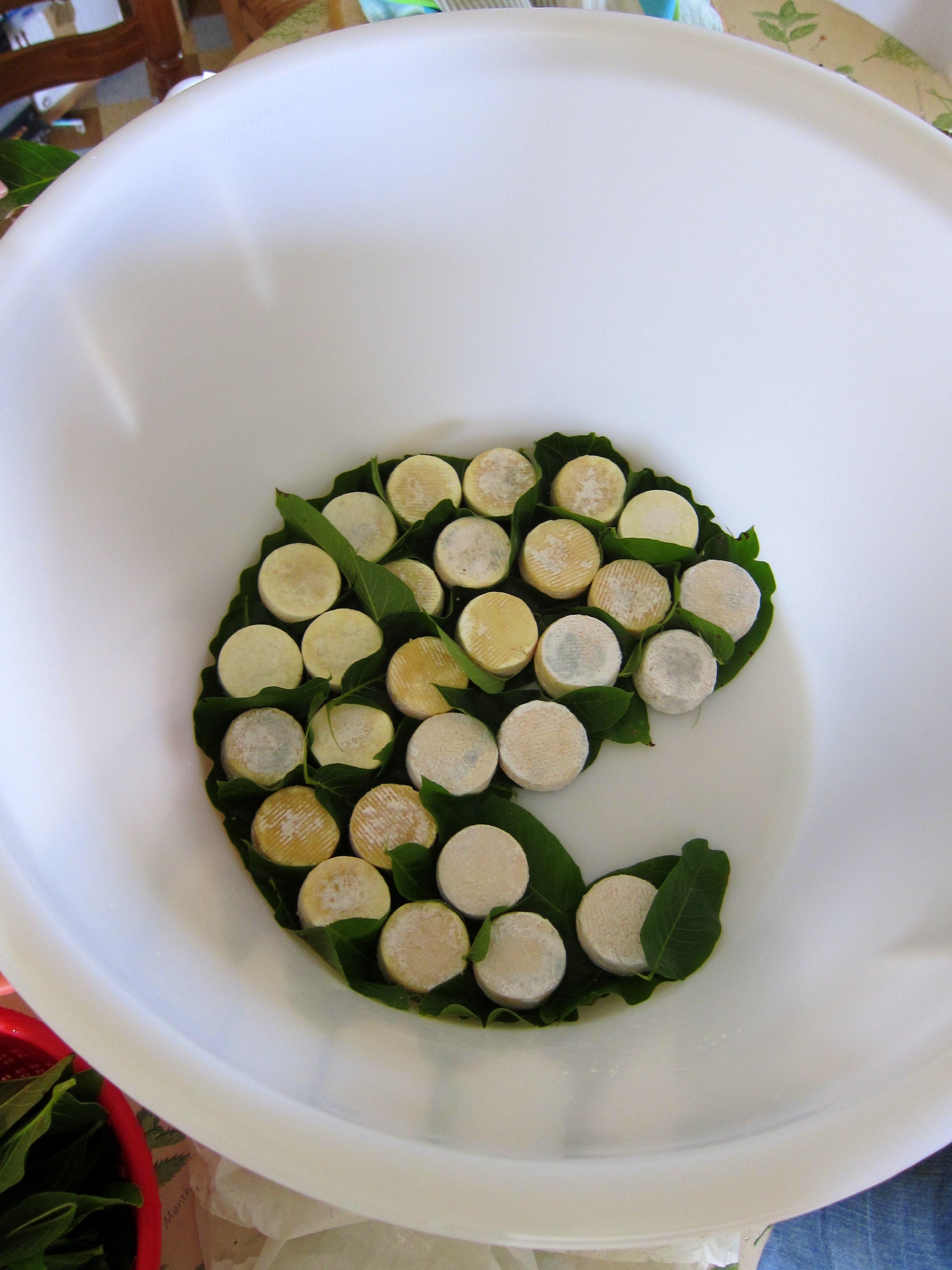
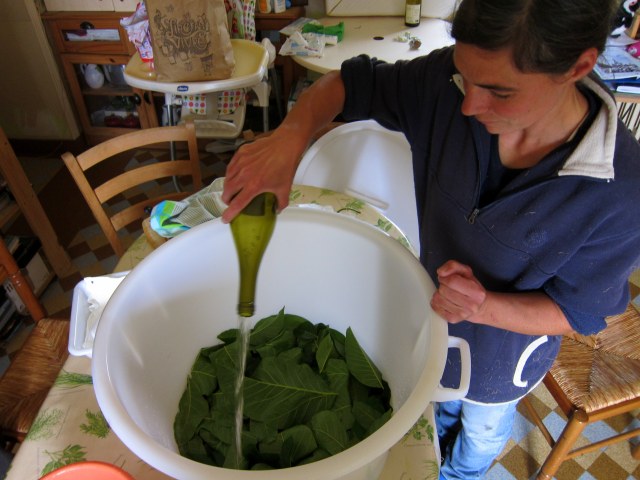
As stated before, Alex makes the best cheese and normally doesn’t stray from her usual methods. However, while we were there, she decided to try something new and we got to help. She gathered walnut leaves from the trees in her yard and wrapped some of the younger, slightly moldy crottins in the leaves. Then she poured two bottles of local organic 2 year old sauvignon blanc over the cheeses. The whole thing soaked overnight.
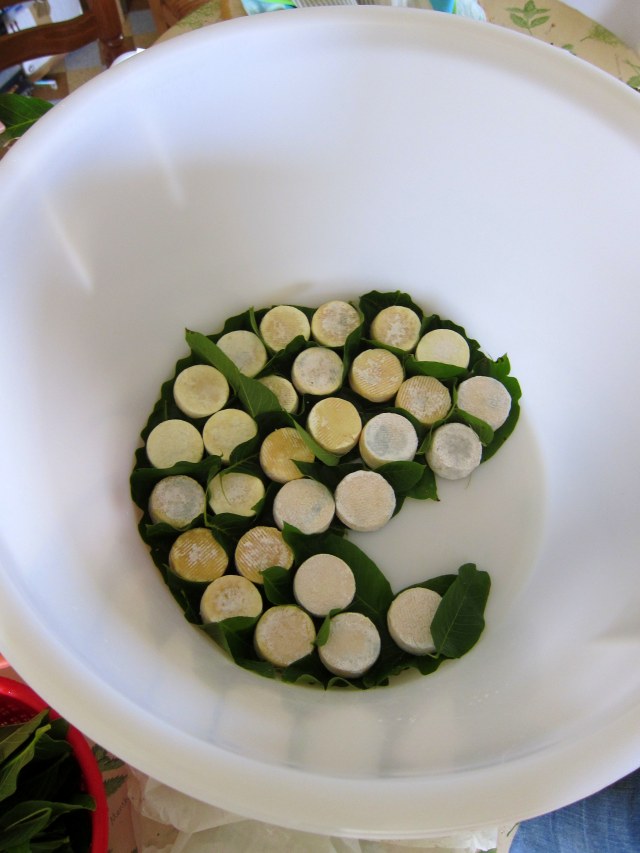
Crottins with walnut leaves
Crottins with walnut leaves

IMG_6794

Adding the wine

The cheese was allowed to dry out in the fridge for a few days before we tried it. The wine soaked cheese gave off the delicate floral scents from the wine and the combination of the goat cheese flavor and the volatile notes from the alcohol made it especially delicious.